



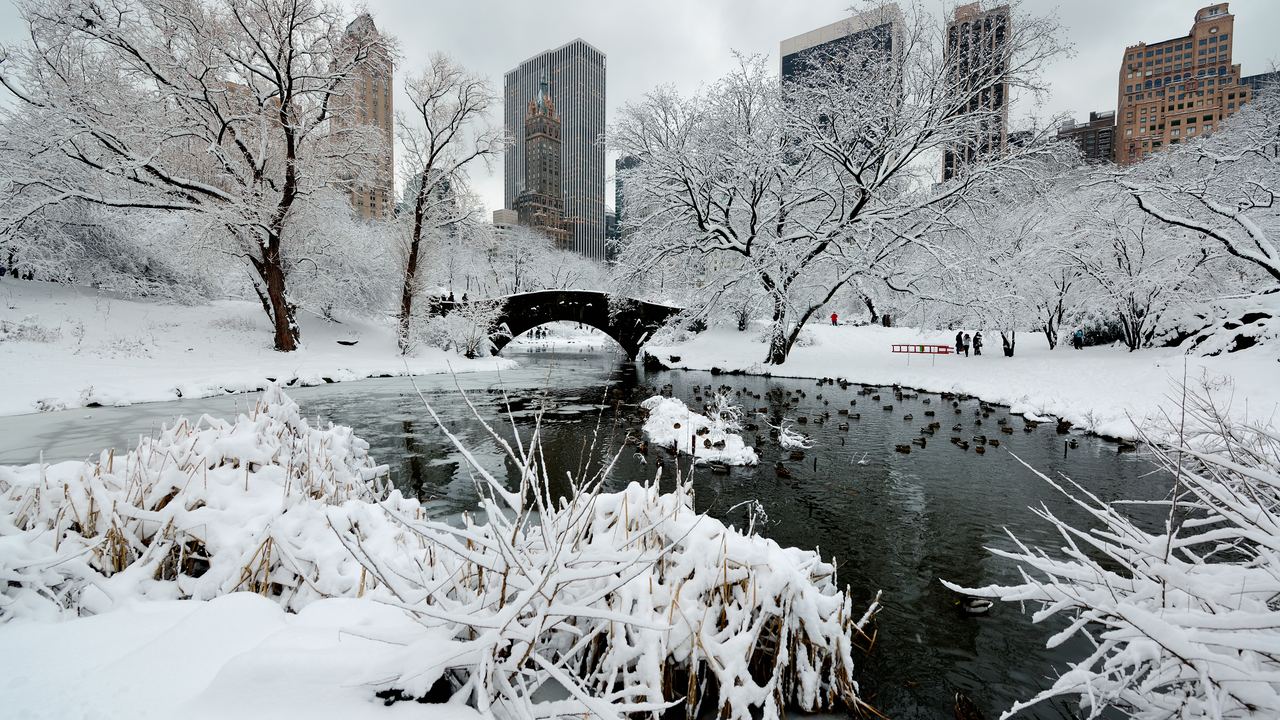
The Metropolitan Museum's main building, The Met Fifth Avenue, is open 10 am to 5 pm on Sunday, Monday, Tuesday and Thursday, and 10 am to 9 pm on Friday and Saturday. It is closed every Wednesday. The Met Cloisters, the medieval branch in Fort Tryon Park, keeps the same Wednesday closure, opens at 10 am, and closes at 5 pm from March to October and at 4:30 pm from November to February. These are the hours the museum published on its Plan Your Visit page as of September 2026.
The best time to go depends on what you mean. For the museum itself, any open day works, and the museum publishes no crowd data to say otherwise. For New York around it, the calendar matters a lot: the 30-year climate normals below show where a morning in the galleries and an afternoon in Central Park fit together, and where the park is better saved for another trip.
What are the Metropolitan Museum's opening hours?
| Site | Days open | Hours | Closed |
|---|---|---|---|
| The Met Fifth Avenue (1000 Fifth Ave at 82nd St) | Sun, Mon, Tue, Thu | 10 am-5 pm | Every Wednesday |
| The Met Fifth Avenue | Fri, Sat | 10 am-9 pm | Every Wednesday |
| The Met Cloisters (Fort Tryon Park) | Thu-Tue, March-October | 10 am-5 pm | Every Wednesday |
| The Met Cloisters | Thu-Tue, November-February | 10 am-4:30 pm | Every Wednesday |
Two things trip people up. The first is Wednesday. Plenty of guides online still say the Met closes on Mondays, which stopped being true in 2013, when it began opening seven days a week, or on Tuesdays, which was a pandemic-era schedule. Today the closed day is Wednesday, and it applies to both sites and to the museum's cafés. If Wednesday is your only free day, see the Wednesday plan in our itineraries page.
Both Met sites are closed every Wednesday, all year. If your trip includes one Wednesday, that is the day for another museum, not for the Met.
The second is the Cloisters' winter hours. The museum switches to a 4:30 pm closing on November 1 and back to 5 pm on March 1. That half hour matters because the Cloisters sit about six miles north of the main building, and one ticket covers both sites on the same day. On a winter day, do the Cloisters first. The reasons, and the routes, are on our getting-there page.
Which days of the year is the Met closed?
Besides every Wednesday, the Met Fifth Avenue closes on four days a year: Thanksgiving Day, December 25, January 1 and the first Monday in May. The May closure is for the Costume Institute benefit, which the museum's own calendar lists simply as the Met Gala. The Cloisters close on Thanksgiving, December 25 and January 1, but not on the first Monday in May, so on that Monday the Cloisters are the only Met site you can visit.
Other public holidays are ordinary open days. Memorial Day, the Fourth of July, Labor Day and Presidents' Day do not appear among the closures in the museum's schedule for 2026, so they follow the normal hours for their weekday (and a holiday that falls on a Wednesday is closed anyway). We read that schedule in September 2026; the museum can add a closure at short notice, and it does.
Short-notice closures also happen inside the building. The museum states that it does not guarantee access to every gallery at all times, and it lists current closures on its gallery closures page. In the last days of September 2026, for example, the museum's CMS marked the gallery of the Temple of Dendur closed, together with a dozen other Egyptian galleries and no reason given; on September 29 Dendur was open again while some of the others were still shut. Closures come and go within days, so if there is one room you are crossing an ocean for, check that page the day before. The routes on our what-to-see page say which areas are closed for longer renovations.
Is there a last entry time?
The museum publishes none. Some third-party sites say entry stops 30 minutes before closing; we found no such rule in the museum's own text. In practice the question answers itself: the building is over two million square feet, and arriving 45 minutes before a 5 pm closing buys you one wing at a jog. If you can only come late, come on a Friday or Saturday, when you get four more hours.
When is the Met busiest, and when is it quiet?
Most guides get this part wrong. The museum publishes nothing about its busiest or quietest times. We searched every current visitor page in its content system in September 2026 and found no statement about crowded days, quiet hours or evening crowds. When a site tells you "Tuesday mornings are quietest" or "the Met is empty on Friday nights", it is repeating folklore, and a few of those pages also recommend Wednesday mornings, the one time the museum is shut.
What we can do is reason from the facts the museum does publish:
- Most visitors are local. In fiscal year 2025 local visitors were 62 percent of the total and out-of-state American visitors 23 percent, according to the museum's attendance release. Locals come when they are free, so weekends and public holidays carry the weight of the city's own visitors on top of the tourists.
- Friday and Saturday have four extra hours. The same number of people spread over eleven hours instead of seven should thin out. Whether it does on a given night depends on what else is on, and nobody publishes the figures.
- Groups register in advance. All groups of ten or more and every third-party guided tour must book with the museum. School groups follow the school calendar, so expect them on weekday mornings between September and June, not in July and August.
- Big openings pull crowds. The public opening day of the Michael C. Rockefeller Wing, May 31, 2025, drew 33,700 visitors, the museum's highest single day since 2017. The first weeks of a major exhibition behave the same way.
- Rain moves people indoors. A museum this size is the obvious rainy-day plan for locals and tourists alike, so a wet Saturday is the combination we would avoid.
The one queue the museum itself warns about is security. Every visitor and every member passes a bag check at the entrance, and the visitor guidelines ask you to plan for lines there. Buying a ticket online lets you walk from security straight to a gallery entrance, but it does not shorten the security line, and no product can. Our rules and bags page explains what slows that check down.
What is the best time of day to visit?
Our rule of thumb, which is reasoning and not data: arrive at 10 am, when the building opens, and see the most requested rooms first, or come after 5 pm on a Friday or Saturday, when the day visitors head out. Note that on Saturday and Sunday members already have the building from 9 am (a membership perk, September 2026), so the 10 am opening is not an empty museum on weekends. On late evenings most museum cafés closed at 8 pm in September 2026, an hour before the galleries (current times on the museum's dining page).
What is New York weather like, month by month?
The Met is indoors and climate-controlled, so the weather only decides what you do before and after. The table gives the official NOAA climate normals for 1991-2020 at the Central Park weather station, which stands by Belvedere Castle, about a third of a mile west of the museum. Figures are 30-year averages as published by NOAA; Celsius and millimetres are our conversions.
| Month | Average high | Average low | Precipitation | Rain days | Snowfall |
|---|---|---|---|---|---|
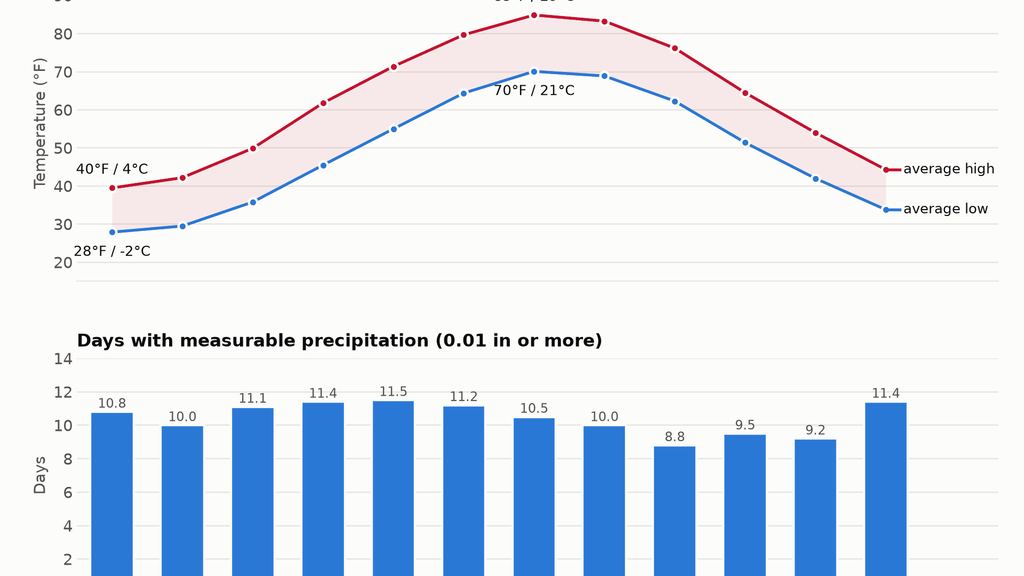
| January | 39.5 °F / 4.2 °C | 27.9 °F / -2.3 °C | 3.64 in / 92 mm | 10.8 | 8.8 in / 22.4 cm |
| February | 42.2 °F / 5.7 °C | 29.5 °F / -1.4 °C | 3.19 in / 81 mm | 10.0 | 10.1 in / 25.7 cm |
| March | 49.9 °F / 9.9 °C | 35.8 °F / 2.1 °C | 4.29 in / 109 mm | 11.1 | 5.0 in / 12.7 cm |
| April | 61.8 °F / 16.6 °C | 45.5 °F / 7.5 °C | 4.09 in / 104 mm | 11.4 | 0.4 in / 1.0 cm |
| May | 71.4 °F / 21.9 °C | 55.0 °F / 12.8 °C | 3.96 in / 101 mm | 11.5 | 0.0 in / 0.0 cm |
| June | 79.7 °F / 26.5 °C | 64.4 °F / 18.0 °C | 4.54 in / 115 mm | 11.2 | 0.0 in / 0.0 cm |
| July | 84.9 °F / 29.4 °C | 70.1 °F / 21.2 °C | 4.60 in / 117 mm | 10.5 | 0.0 in / 0.0 cm |
| August | 83.3 °F / 28.5 °C | 68.9 °F / 20.5 °C | 4.56 in / 116 mm | 10.0 | 0.0 in / 0.0 cm |
| September | 76.2 °F / 24.6 °C | 62.3 °F / 16.8 °C | 4.31 in / 109 mm | 8.8 | 0.0 in / 0.0 cm |
| October | 64.5 °F / 18.1 °C | 51.4 °F / 10.8 °C | 4.38 in / 111 mm | 9.5 | 0.1 in / 0.3 cm |
| November | 54.0 °F / 12.2 °C | 42.0 °F / 5.6 °C | 3.58 in / 91 mm | 9.2 | 0.5 in / 1.3 cm |
| December | 44.3 °F / 6.8 °C | 33.8 °F / 1.0 °C | 4.38 in / 111 mm | 11.4 | 4.9 in / 12.4 cm |
Read the table as a visitor rather than a meteorologist and a few things stand out. First, New York has no dry season. Rain days sit between 8.8 (September) and 11.5 (May) every month, roughly one day in three, so an umbrella belongs in the bag in any month. September is the driest by count and also one of the most comfortable, with an average high of 76.2 °F (24.6 °C).
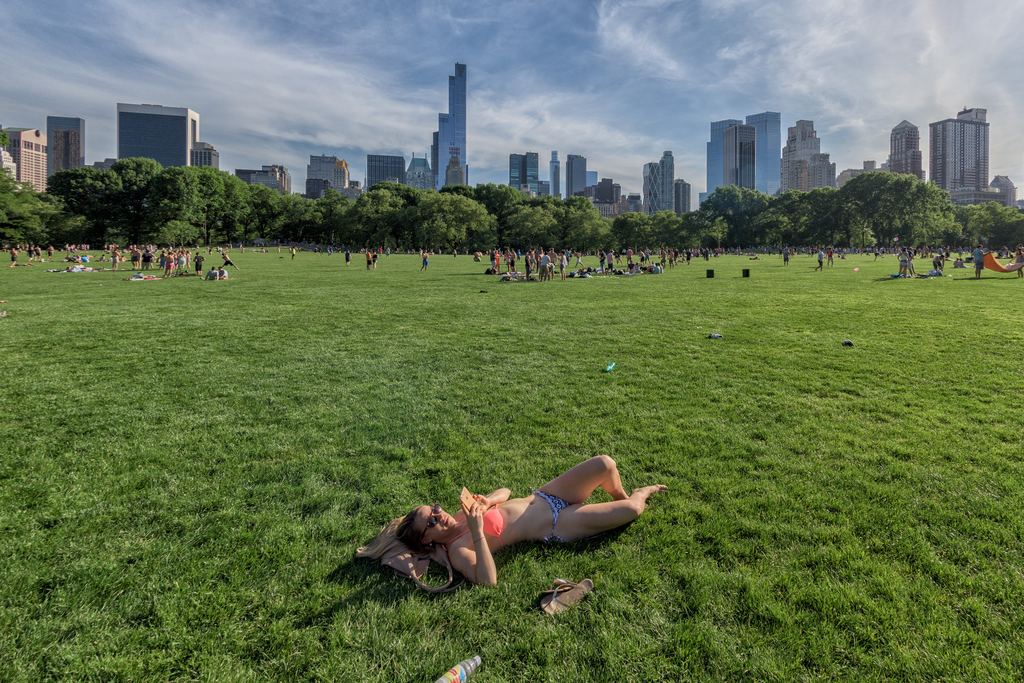
Second, July and August are hot and wet. Average highs of 84.9 °F and 83.3 °F in Central Park do not capture the humidity, and those two months bring 4.6 inches of rain each, often as short afternoon storms. That is when a long museum morning and a short park walk in the evening make sense.
Third, snow is a January and February affair: 8.8 and 10.1 inches on average, with about two days a month of an inch or more. December averages under 5 inches. Snow and ice make the uphill walk to the Cloisters through Fort Tryon Park slippery, which is one more reason to take the bus for the last stretch in winter.
A note on shelf life. These are the current official normals, and NOAA replaces them every ten years. On that cycle the next set, covering 2001-2030, should come out around 2031; until NOAA publishes it, these remain the official US reference.
How much daylight is there, and when does the sun set?
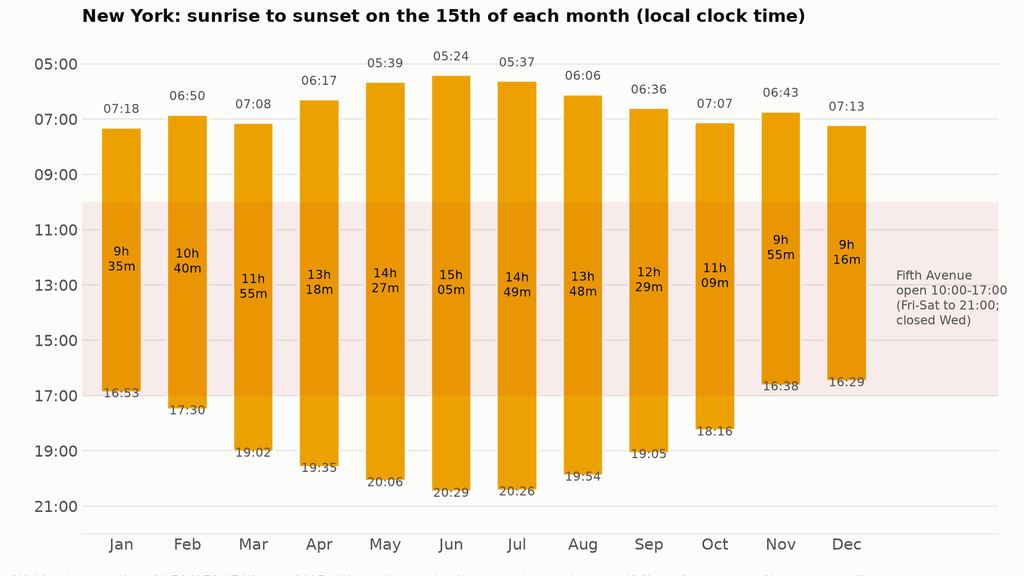
Daylight matters more than people think, because both Met sites close in the afternoon on most days. The times below are for the 15th of each month at Central Park, computed with NOAA's solar algorithm and checked against the US Naval Observatory, which agrees to within a minute. They move by a minute or so from one year to the next, so treat them as typical for any year.
| Month (15th) | Sunrise | Sunset | Day length |
|---|---|---|---|
| January | 7:18 am | 4:53 pm | 9 h 35 min |
| February | 6:50 am | 5:30 pm | 10 h 40 min |
| March | 7:08 am | 7:02 pm | 11 h 55 min |
| April | 6:17 am | 7:35 pm | 13 h 18 min |
| May | 5:39 am | 8:06 pm | 14 h 27 min |
| June | 5:24 am | 8:29 pm | 15 h 05 min |
| July | 5:37 am | 8:26 pm | 14 h 49 min |
| August | 6:06 am | 7:54 pm | 13 h 48 min |
| September | 6:36 am | 7:05 pm | 12 h 29 min |
| October | 7:07 am | 6:16 pm | 11 h 09 min |
| November | 6:43 am | 4:38 pm | 9 h 55 min |
| December | 7:13 am | 4:29 pm | 9 h 16 min |
Two consequences for a visit. In December the sun sets at about 4:29 pm, the minute the Cloisters close for the day, so the walk back through Fort Tryon Park to the subway happens at dusk; start earlier if that bothers you. In June, by contrast, a Friday at the Met Fifth Avenue ends at 9 pm with sunset only half an hour behind you, and the steps on Fifth Avenue are still warm.
Which months are best for the Met, the Cloisters and the walks around them?
What each month is good for, destination by destination. The museums are open all year; the grades describe how the season treats the visit.
| Month | 1 | 2 | 3 | 4 | 5 | 6 | 7 | 8 | 9 | 10 | 11 | 12 |
|---|---|---|---|---|---|---|---|---|---|---|---|---|
| The Met Fifth AvenueIndoors and climate-controlled: good every month, at its most useful when the cold, snow or summer heat make long walks hard. | 1 | 2 | 3 | 4 | 5 | 6 | 7 | 8 | 9 | 10 | 11 | 12 |
| The Met Cloisters and Fort Tryon ParkThe cloister gardens peak in late spring and early summer. From November to February the site closes at 4:30 pm and the park walk is cold and dark early. | 1 | 2 | 3 | 4 | 5 | 6 | 7 | 8 | 9 | 10 | 11 | 12 |
| Central Park walking toursSpring bloom and autumn foliage. July and August are hot and humid: walk early. Winter walks are short and cold. | 1 | 2 | 3 | 4 | 5 | 6 | 7 | 8 | 9 | 10 | 11 | 12 |
| Fifth Avenue and Gilded Age walksStreet walks of two hours or so, mostly on the pavement: best in mild months, tiring in July and August, cold in January and February. | 1 | 2 | 3 | 4 | 5 | 6 | 7 | 8 | 9 | 10 | 11 | 12 |
| Other New York museumsThe all-year plan for cold, wet or hot days, and the only museum plan for a Wednesday, when both Met sites are closed. | 1 | 2 | 3 | 4 | 5 | 6 | 7 | 8 | 9 | 10 | 11 | 12 |
Our grading from NOAA 1991-2020 normals and the museums' published hours. It says nothing about crowds, which no museum here publishes.
The matrix reads the museums the other way round from the walks. The Met's best months are the ones when New York is hardest on foot: in January and February a whole day inside at 70 °F beats a frozen park. The Cloisters are the exception because they are half garden. The Met's own garden notes say the herbs and flowers of the three cloister gardens are at their peak in late spring and early summer, and that in winter the covered walkways become a conservatory of potted plants, so a January visit is not wasted, just different. For the full Cloisters visit, see our Cloisters guide.
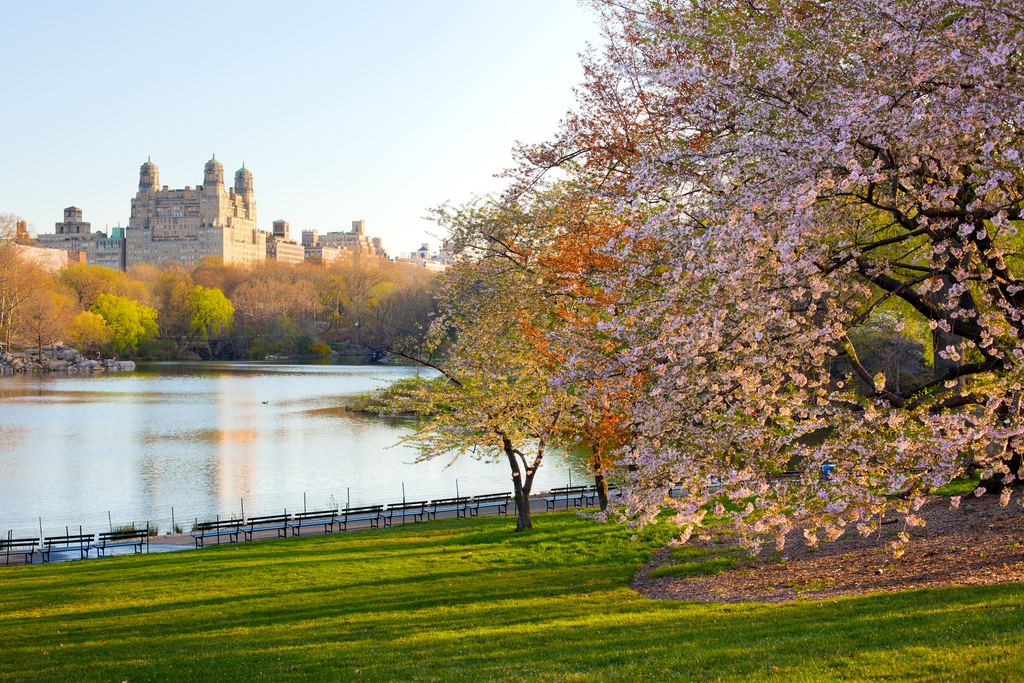
Seasonal plan
Why late spring is the Cloisters' month
Three of the reconstructed cloisters are planted as gardens, with plantings based on medieval documents and works of art. From May into June they are at their fullest, and Fort Tryon Park around them is green all the way down to the Hudson. It closes at 5 pm in those months, with sunset after 8 pm.
So which month should you choose?
If you can choose freely, pick late April to early June or mid-September to early November. Average highs in those windows run from the upper 50s to the upper 70s °F (about 14-26 °C), the park is worth an afternoon, and the Cloisters' gardens are either in full growth or still going. The catch: these are also the months most visitors pick.
If your dates are fixed, no month rules the Met out. December brings the shortest days and the holiday weeks, when locals on vacation fill museums; January and February bring the coldest weather and, in our reading, the strongest case for spending a full day inside. Summer rewards an early start: the museum at 10 am, the park before the heat or after 6 pm.
Price has no season here. Admission is the same in every month, and the pay-what-you-wish rules for New York residents do not change with the calendar; our admission page has the details.
Opening hours and timing: quick answers
Is the Metropolitan Museum open on Mondays?
Yes, 10 am to 5 pm, except on the first Monday in May, when the Met Fifth Avenue closes for the Costume Institute benefit. The Cloisters stay open that Monday.
Is the Met open on Wednesdays?
No. Both the Met Fifth Avenue and the Met Cloisters are closed every Wednesday, and so are the museum's cafés. MoMA and the American Museum of Natural History open daily (September 2026).
What time does the Met close on Friday and Saturday?
At 9 pm. On the other open days it closes at 5 pm. The Cloisters never open late: 5 pm from March to October, 4:30 pm from November to February.
Is the Met open on Christmas and New Year's Day?
No. Both sites close on December 25 and January 1, and on Thanksgiving Day.
What is the quietest time to visit the Met?
The museum does not publish crowd data, so any precise answer is a guess. Reasoning from what it does publish, weekday opening time outside school holidays and the late hours on Friday and Saturday are the best bets; wet weekends and holiday weeks are the worst.
How long should I plan for the Met?
Two hours for a focused visit, half a day for the major collections, a full day if you want depth. Our route page has three plans.
What is the weather like in New York in October?
Mild: an average high of 64.5 °F (18.1 °C) and low of 51.4 °F (10.8 °C) at Central Park, with about 9.5 rain days (NOAA normals 1991-2020).
Does one ticket get me into the Fifth Avenue building and the Cloisters on one day?
Yes, on the date printed on it. The trip takes about an hour door to door by A train, or about 1 hour 25 minutes on the M4 bus, so in winter go to the Cloisters first.
Central Park walks for the months when the park is at its best
Guided walks in the park, most of them about two hours.
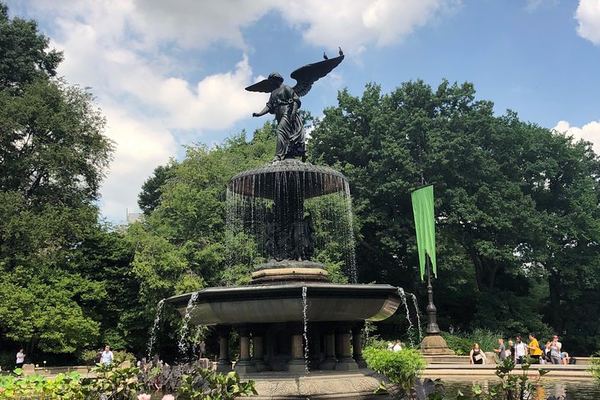
Central Park and Upper East Side Morning Walk with a Native New Yorker
A native New Yorker leads a 2-3 hour morning walk from Grand Army Plaza to Bethesda Terrace, Belvedere Castle and the townhouses of the Upper East Side.

Central Park Birdwatching Walk for Beginners with That Quirky Bird Girl
Steph of That Quirky Bird Girl teaches beginners to spot cardinals, jays and thrushes in the Ramble and to ID songs with the Merlin app. Binoculars on request.

Central Park Film and TV Locations Walking Tour
Actor guides from On Location Tours hold up film stills at more than 30 Central Park locations, from Bow Bridge to Wollman Rink. Two hours, English commentary.
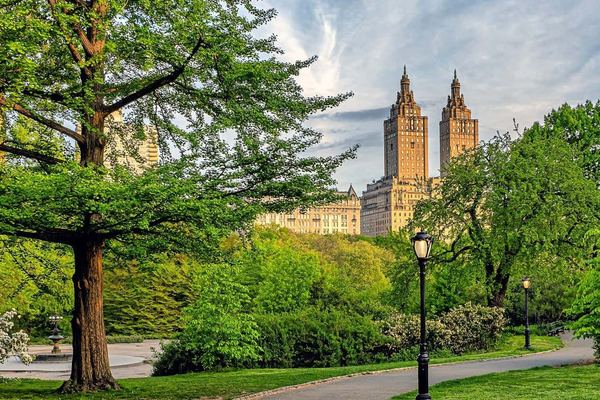
Central Park Free Walking Tour: Bethesda Terrace to Strawberry Fields
Tip-based walk in English from the Maine Monument: Balto, the Mall, Bethesda Terrace, Bow Bridge, the Ramble and Belvedere Castle. No groups over six people.
Ratings collected by Viator, Tripadvisor and Civitatis
Plan the days around the museum
Day plans built around the Met, from a single day to a long weekend, with a Wednesday plan, a rainy-day plan and a Friday evening.
Data verified on. Hours and closures: the museum's CMS (Aug 2026). Climate: NOAA normals 1991-2020, Central Park. Daylight: NOAA algorithm, checked with USNO. Editorial Policy