



The Metropolitan Museum says it has 17 curatorial departments. At The Met Fifth Avenue, seven of them fill the first floor: Egyptian Art; Greek and Roman Art; Arms and Armor; the arts of Africa, Oceania and the Americas in the Michael C. Rockefeller Wing; Medieval Art; European Sculpture and Decorative Arts; and the Robert Lehman Collection. Six have their galleries on the second floor: European Paintings, Asian Art, Islamic Art, Musical Instruments, Drawings and Prints, and Photographs, plus the closed galleries of Ancient West Asian Art. The American Wing spreads over three floors, Medieval Art also runs the whole of The Met Cloisters, and two departments have little or nothing on permanent view this year: Modern and Contemporary Art and the Costume Institute.
Everything on this page was checked against the museum's gallery records and its public Collection API on September 29, 2026. Galleries close at short notice, so treat the "on view" column as what we saw on that date, and use the museum's gallery closures page for the current list. For what the museum is and how departments differ from wings, see our guide to the institution.
What are the Met's 17 curatorial departments?
In alphabetical order, with the names the museum uses: The American Wing; Ancient West Asian Art; Arms and Armor; Arts of Africa, Oceania, and the Americas; Asian Art; The Costume Institute; Drawings and Prints; Egyptian Art; European Paintings; European Sculpture and Decorative Arts; Greek and Roman Art; Islamic Art; Medieval Art and The Cloisters; Modern and Contemporary Art; Musical Instruments; Photographs; and The Robert Lehman Collection. The museum lists them on its departments page.
The total of seventeen is the museum's own, repeated in texts it edited in September 2026: the page of its Objects Conservation department speaks of "all of the Museum's seventeen curatorial departments". There is one wrinkle. When the Rockefeller Wing reopened in May 2025, the museum's reopening release described the arts of Africa, the ancient Americas and Oceania as three traditions that "stand as independent entities", and its website now gives each a page of its own. The museum has not changed its count, so we keep seventeen and treat the Rockefeller Wing as one entry, split in three below. Ancient West Asian Art is also a new name: the museum announced in May 2025 that the Department of Ancient Near Eastern Art was being renamed, so older guides use the old one.
Why does the Met's collection API list nineteen?
Query the museum's free Collection API and you get 19 entries, not 17. Nobody is missing: the difference is bookkeeping. The API splits Medieval Art and The Cloisters into two ("Medieval Art" and "The Cloisters"), adds "The Libraries", which is not a curatorial department, and keeps older labels in two places: the American Wing appears as "American Decorative Arts" and Modern and Contemporary Art as "Modern Art". Seventeen, plus one for the Cloisters split, plus the libraries, makes nineteen. The museum's conservation, scientific research and education departments are not part of either count.
The Met has 17 curatorial departments by its own count. A guide that says 18 or 19 is either out of date or reading the API's list.
Which department is where? The whole map in one table
Floors follow the museum's own naming: the ground floor is below street level on the Fifth Avenue side, floor 1 is the level of the Great Hall, floor 2 is up the grand staircase. The highlight in the last column is one work per department that the Collection API reported on view, in the gallery shown, on September 29, 2026. We chose permanent collection works where possible, because exhibitions move on.
| Department | What you'll see | Where | One highlight (on view Sept 29, 2026) |
|---|---|---|---|
| Egyptian Art | Egypt from prehistory to Roman rule: tomb chapels, coffins, statues, a whole temple | Fifth Ave, floor 1, galleries 100–138 | Temple of Dendur, gallery 131 |
| Greek and Roman Art | Greek sculpture and vases, Roman portraits, frescoed rooms, Cypriot art | Fifth Ave, floor 1, mezzanine and floor 2 (Cyprus), 150–176 | Marble kouros, ca. 590–580 BCE, gallery 154 |
| Arms and Armor | European and Asian armor, weapons, mounted horsemen in armor | Fifth Ave, floor 1, 370–380 | Field armor of Henry VIII, ca. 1544, gallery 371 |
| Arts of Africa, Oceania, and the Americas | Three collections in the Michael C. Rockefeller Wing | Fifth Ave, floor 1, 340–363 | Pendant mask of Iyọba Idia, Benin, 16th century, gallery 342 |
| Medieval Art and The Cloisters | Byzantine and medieval European art; the whole Cloisters building | Fifth Ave floor 1, 300–307; Cloisters 001–020 | The Unicorn Tapestries, Cloisters gallery 017 |
| European Sculpture and Decorative Arts | Sculpture, furniture, ceramics and period rooms, Renaissance to 1900 | Fifth Ave, floor 1, 500–556 (two rooms upstairs) | Carpeaux, Ugolino and His Sons, gallery 548 |
| The Robert Lehman Collection | One banker's collection: Italian and Northern painting, drawings, decorative arts | Lehman Wing, floor 1 and ground floor, 950–965 | Petrus Christus, A Goldsmith in His Shop, gallery 953 |
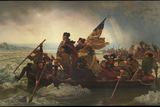
| The American Wing | American paintings, sculpture, furniture and period rooms | Fifth Ave, floors 1–3 and mezzanine, 700–774 | Leutze, Washington Crossing the Delaware, gallery 760 |
| European Paintings | Old Masters to the early 20th century | Fifth Ave, floor 2, 600s and 800–830 | Vermeer, Young Woman with a Water Pitcher, gallery 614 |
| Asian Art | China, Japan, Korea, South and Southeast Asia, the Himalayas | Fifth Ave, floors 2 and 3, 200–253 | Buddha of Medicine mural, ca. 1319, gallery 206 |
| Islamic Art | Art of the Arab lands, Turkey, Iran, Central Asia and later South Asia | Fifth Ave, floor 2, 450–464 | The Damascus Room, 1707, gallery 461 |
| Ancient West Asian Art | Mesopotamia, Assyria, Iran; formerly Ancient Near Eastern Art | Fifth Ave, floor 2, 400–406: closed; the museum has announced a 2027 reopening | Lamassu from Nimrud: not on view |
| Musical Instruments | Instruments from around the world, playable in concerts | Fifth Ave, floor 2, 680–684 | Cristofori piano, 1720, gallery 684 |
| Drawings and Prints | Works on paper, shown in rotating displays | Fifth Ave, floor 2, 690–693 | Rotates; Catlett, Sharecropper, gallery 690 |
| Photographs | Photography from the 1830s to now, in rotation | Fifth Ave, floor 2, 850–852 | Rotates; an 1844 landscape by Choiselat, gallery 852 |
| The Costume Institute | Fashion and dress; no permanent display | Exhibitions only, in galleries that change with each show | Changes with each exhibition |
| Modern and Contemporary Art | Art from 1890 to now | 900–926 mostly closed for the Tang Wing (museum's date: 2030); works shown elsewhere | Picasso, Gertrude Stein, gallery 965 |
What's on the first floor at Fifth Avenue?
Egyptian Art
The Egyptian galleries, 100 to 138, open to the right of the Great Hall and run in time order from the Predynastic period to Roman Egypt. You enter through the Mastaba Tomb of Perneb (gallery 100) and finish at the Temple of Dendur in gallery 131, in its glass-walled wing facing the park. On the way, look for the blue faience hippo nicknamed "William" (about 1961–1878 B.C., gallery 111), the museum's unofficial mascot. The museum's History page says almost all of its roughly 30,000 Egyptian objects are on display, which is rare in a building where most of the collection sits in storage (another museum record gives about 26,000).
On September 29, 2026 the museum's records marked galleries 116 to 120 closed, the rooms for early Dynasty 18 and Amenhotep III. The Temple of Dendur had been marked closed from September 26 and was open again that day. Tours of this collection are grouped under Egyptian art and the Temple of Dendur.

Greek and Roman Art
To the left of the Great Hall, galleries 150 to 176, reinstalled over fifteen years and reopened in 2007. The marble kouros of about 590–580 BCE (gallery 154) is an Attic statue of a youth from the beginning of Greek monumental sculpture; the frescoed bedroom from a villa at Boscoreale, near Pompeii, of about 50–40 BCE (gallery 165) is a whole Roman room. The museum's very first acquisition, the garlanded sarcophagus numbered 70.1, is in gallery 169. Upstairs, the Cypriot galleries (173–176) are closed with the Ancient West Asian renovation, and gallery 168 (Rome in the second century A.D.) was marked closed on September 29.
Arms and Armor
Galleries 370 to 380, centred on the Ronald S. Lauder Arms and Armor Court (gallery 371) with its mounted figures in full armor. Two royal suits stand out. One is the field armor of Henry VIII of England, about 1544 (gallery 371), which the gallery text says the king wore in his last campaign against the French in 1544 (the object record is more careful: he "probably" wore it at the siege of Boulogne). Don't confuse it with the armor garniture dated 1527 in the same court, which the museum describes only as "probably" made for him. The other is the parade armor of Henry II of France, about 1555 (gallery 374). Older than any of them by several hundred thousand years, a set of stone hand axes dated 700,000 to 200,000 BCE sits in gallery 370. They are the oldest-dated objects in the museum's online collection, and they belong to this department.

Arts of Africa, Oceania, and the Americas (Michael C. Rockefeller Wing)
The wing reopened on May 31, 2025 after a multi-year renovation, and its galleries, 340 to 363, are divided by region. Africa (340–345) includes the pendant mask of Iyọba Idia, a sixteenth-century ivory from the kingdom of Benin (gallery 342). Oceania (350–354) has an Asmat bisj ancestor pole carved in the late 1950s (gallery 350), part of the collection that carries Michael C. Rockefeller's name. The ancient Americas (356–363) show gold and ceramics, among them a Sicán funerary mask of 900–1100 CE (gallery 361) and a Moche stirrup-spout bottle (gallery 362). All were open on September 29.
Medieval Art at Fifth Avenue
Eight galleries, 300 to 307, behind the grand staircase: Byzantine art in 300 to 303, the Medieval Sculpture Hall in 305 and the treasury in 306. In gallery 304, an ivory plaque with Christ receiving Magdeburg Cathedral from Emperor Otto I dates from about 962 to 968. The wrought-iron choir screen that fills the end of the Sculpture Hall, from the Cathedral of Valladolid and completed around 1763, belongs to a different department, European Sculpture and Decorative Arts. The name on a gallery and the department that owns what stands in it don't always match.
European Sculpture and Decorative Arts
Galleries 500 to 556: sculpture, furniture, porcelain, silver, tapestries and period rooms from Europe. Its glass-roofed Petrie European Sculpture Court (gallery 548) holds Carpeaux's Ugolino and His Sons (1865–67). The department has two rooms upstairs too, which is how Degas's Little Fourteen-Year-Old Dancer ends up in gallery 815 among the Degas paintings on the second floor. Gallery 540 (the Linsky collection) was marked closed on September 29.
The Robert Lehman Collection
The bequest of the banker Robert Lehman, shown as he wanted it, in its own wing: galleries 950 to 965, on the first floor and the ground floor on the park side of the building. Italian and Northern Renaissance paintings are its core. Petrus Christus's A Goldsmith in His Shop, dated 1449, is in gallery 953. This is also where the west facade of the original 1880 building survives, now indoors.
What's on the second floor?
European Paintings
Up the grand staircase, 75 numbered rooms, second only to the American Wing, in the 600s (paintings from 1250 to 1800) and 800 to 830 (the nineteenth and early twentieth centuries). Three works on view on September 29: Vermeer's Young Woman with a Water Pitcher, about 1662 (gallery 614); Bruegel's The Harvesters, 1565 (gallery 638); and Van Gogh's Wheat Field with Cypresses, 1889 (gallery 822). Gallery 813 was marked closed that day.
Asian Art
Fifty-four galleries, 200 to 253, over two floors. The Great Hall Balcony (200 to 205) is given mostly to Chinese ceramics. In gallery 206 a Chinese wall painting of the Buddha of Medicine, about 1319, covers a whole wall. The third floor holds Chinese decorative arts (219 to 222) and the arts of Tibet and Nepal (252 and 253). Paintings, screens and textiles rotate often to limit light exposure, so a Japanese screen seen last year may be in storage now.
Islamic Art
Galleries 450 to 464, opened in their current form on November 1, 2011 as the galleries for the Art of the Arab Lands, Turkey, Iran, Central Asia and Later South Asia. The best-known room is the Damascus Room, a wood-panelled reception room from a Syrian house, dated 1707 (gallery 461). Gallery 451 was marked closed on September 29.
Ancient West Asian Art
All seven galleries, 400 to 406, are closed for renovation. The museum announced in May 2025 that new galleries for the art of Ancient West Asia and of Ancient Cyprus will open in 2027. Until then the Assyrian reliefs and the human-headed winged lion (lamassu) from Nimrud are off view; the API listed it as not on view on September 29. A handful of nineteenth-century pieces inspired by the Assyrian excavations, such as an urn with Assyrian scenes of 1851, are catalogued under this department and shown among British art in gallery 516. Some tours in our Bible and ancient world category still name these galleries, so ask what replaces them.
Musical Instruments
Galleries 680 to 684, a compact suite on the second floor. The department holds a grand piano made in 1720 by Bartolomeo Cristofori, the Florentine who invented the instrument, and the "Antonius" violin by Antonio Stradivari, 1711, both in gallery 684 on September 29.
Drawings and Prints, and Photographs
Both departments show their collections in rotation, because paper and photographs fade in light. Drawings and Prints uses galleries 690 to 693; on September 29 gallery 690 had Elizabeth Catlett's Sharecropper (1952, published 1968–70). Photographs uses galleries 850 to 852, including one for contemporary work; that day gallery 852 showed an 1844 landscape by Marie-Charles-Isidore Choiselat. Don't plan a visit around a specific drawing or photograph without checking its object page first.
Which floor is the American Wing on?
All of them, almost. The American Wing is both a department and a building, and its 77 numbered galleries (700 to 774, with 746 split in two and an extra 774A) climb from the first floor to the third. The entrance is the glass-roofed Charles Engelhard Court (gallery 700), with the marble facade of the Branch Bank of the United States brought from Wall Street. The period rooms are spread over three floors, and the paintings galleries are on the second, including Leutze's Washington Crossing the Delaware, 1851 (gallery 760), Sargent's Madame X, 1883–84 (gallery 771), and Thomas Cole's The Oxbow, 1836 (gallery 759). The Henry R. Luce Center, the visible storage on the mezzanine (galleries 773, 774 and 774A), was marked closed on September 29.
What's at The Met Cloisters?
One department runs the whole building: Medieval Art and The Cloisters. The Cloisters has 18 numbered galleries, 001 to 020, on two levels, and all of them were marked open on September 29, 2026. The Unicorn Tapestries hang in gallery 017 (among them The Unicorn Rests in a Garden, 1495–1505); the Merode Room (gallery 019) holds Robert Campin's Annunciation Triptych, about 1427–32; the Fuentidueña Chapel (gallery 002) is built around a twelfth-century Spanish apse on long-term loan from Spain. Getting there, hours and the gardens are covered in our Cloisters guide.
Which departments can't you see in full right now?
Modern and Contemporary Art. Its galleries, 900 to 926, closed for the construction of the Tang Wing, which the museum has announced for 2030. On September 29, 24 of its 28 numbered galleries, the roof garden among them, were marked closed. Part of the collection is shown in other departments' rooms meanwhile. Picasso's Gertrude Stein (1905–06) and Matisse's Young Sailor II (1906) were in gallery 965, on the ground floor of the Lehman Wing, and other works hang in the European paintings galleries 828 to 830.
The Costume Institute. "Due to the sensitive nature of textiles, The Costume Institute's collection is not on permanent public view," the museum says. It shows the collection only in exhibitions, which come with the regular ticket; outside guides can't lecture inside them, so you see them on your own. Its own ground-floor galleries (980 and 981) were marked closed on September 29. What the department has on, and where, is on the museum's exhibitions page.
Ancient West Asian Art, covered above: closed, with a reopening the museum has announced for 2027.
Most of what's closed at the Met in September 2026 belongs to two projects with announced end dates: Ancient West Asia and Cyprus in 2027, and modern art with the roof garden in 2030. Everything else closes and reopens at short notice.
How can I check that a work is on view before I go?
Search the museum's online collection. Every object page says either "On view at The Met Fifth Avenue in Gallery ___" or "Not on view", and the gallery number leads to the museum's interactive map. Developers can ask the same question of the Collection API with its on-view filter, which is how we checked the works on this page. Two limits: the flag is updated by museum staff, not in real time, and it knows nothing of a room shut for an afternoon. If a guided tour promises a work that turns out to be in a closed gallery, ask the operator what replaces it; our analysis of what tours show lists the gaps we found, and our routes for two hours to a full day are built around what is open.
Questions about the Met's departments
How many departments does the Met have?
17 curatorial departments, by the museum's own count (September 2026). The Collection API lists 19 because it separates the Cloisters from Medieval Art and includes the libraries.
Which department has the most galleries?
The American Wing, with 77 numbered galleries in the museum's records on September 29, 2026, then European Paintings with 75. European Sculpture and Decorative Arts follows with 55, counting its two upstairs rooms, then Asian Art with 54 and Egyptian Art with 39.
Can I see the Costume Institute's collection at the Met?
Only in exhibitions. The collection is not on permanent view because textiles are fragile. Those shows come with the regular ticket, and the museum's exhibitions page lists what is on.
Why can't I see the Assyrian lamassu at the Met?
The galleries of Ancient West Asia (400 to 406) are closed for renovation; the museum has announced they will reopen in 2027 together with new galleries for ancient Cyprus.
Where is the modern art at the Met now?
Mostly in storage until the Tang Wing opens, which the museum has announced for 2030. Some works hang elsewhere: in September 2026, Picasso's Gertrude Stein was in gallery 965 (Lehman Wing, ground floor) and early modern paintings were in galleries 828 to 830.
Is the Temple of Dendur open?
It was marked open in the museum's gallery records on September 29, 2026, after being marked closed from September 26. Galleries 116 to 120 nearby were still closed. Check the museum's gallery closures page on the day.
What is on each floor of the Met?
Floor 1: Egyptian, Greek and Roman, Arms and Armor, Rockefeller Wing, Medieval, European sculpture, Lehman. Floor 2: European Paintings, Asian, Islamic, Musical Instruments, Drawings and Prints, Photographs. The American Wing spans floors 1 to 3; Asian Art continues on floor 3.
Tours of the Egyptian galleries and the Temple of Dendur
Guided visits focused on the department with the most on display.
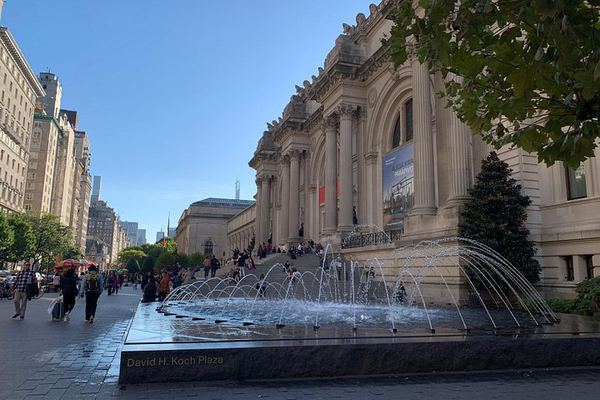
Met Museum Highlights and New York Stories Guided Tour
Egyptian tombs, Roman frescoes, Henry VIII's armor and the Impressionists, tied to New York's own story. 2.5 hours, fees included; the Met shuts Wednesdays.
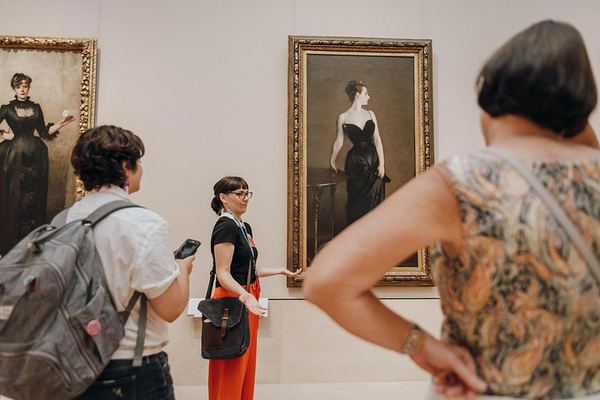
Met Museum Highlights in Two Hours with an Expert Guide
An art guide leads up to 18 people past Monet's Water Lilies, Madame X, Rodin and the Tomb of Perneb in two hours, admission included. You stay on afterwards.
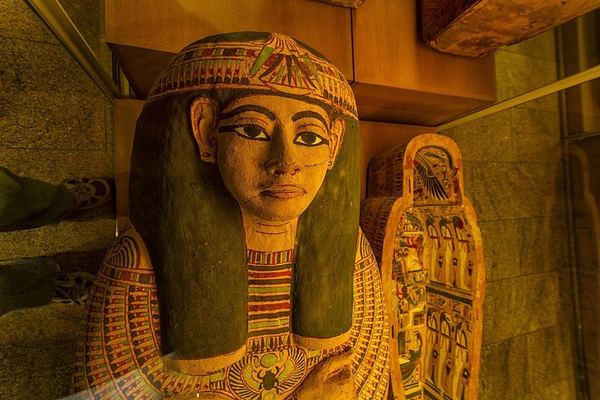
Met Museum Highlights Tour by City Wonders, Entry Ticket Included
City Wonders guides up to 20 people through the Met in two hours, entry ticket included: the Egyptian and American wings, Velazquez, Rembrandt and Van Gogh.
Met Museum Small-Group Tour: Egyptian, European and Asian Art with Admission
Three departments in two hours: Egyptian Art, European Paintings and Asian Art with a live guide, in a group of 12 at most. Museum admission is included.
Ratings collected by Viator and Tripadvisor
Bible and ancient world tours
Themed tours across the ancient departments. The Ancient West Asia galleries are closed (the museum has announced 2027), so check which galleries each one uses.
Ratings collected by Viator and Tripadvisor
Want a guide to pick the departments for you?
Highlights tours choose a route through several departments in about two hours. Compare them before booking.
Data verified on. Departments, galleries and on-view status from the Met's content system and Collection API on 29 Sept 2026; gallery counts are ours. Editorial Policy