



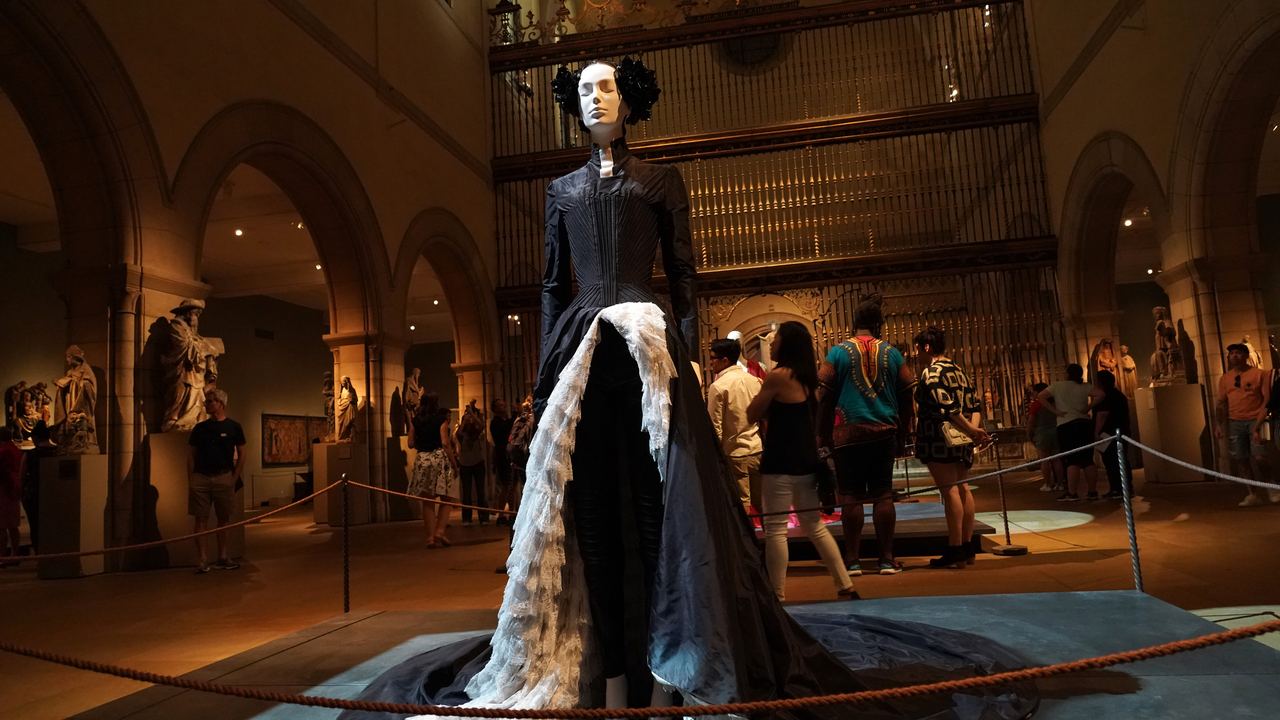
The Metropolitan Museum of Art is a private, non-profit museum founded in 1870 that runs two sites in Manhattan: The Met Fifth Avenue, the main building at 1000 Fifth Avenue on the edge of Central Park, and The Met Cloisters, its museum of medieval European art in Fort Tryon Park. The Fifth Avenue building belongs to the City of New York; the art belongs to the museum. By the museum's own count the collection holds more than 1.5 million objects, looked after by 17 curatorial departments and shown in 466 numbered galleries (448 on Fifth Avenue and 18 at the Cloisters, counted in the museum's gallery records on September 29, 2026).
This page explains those numbers and the structure behind them, so that the building makes sense once you are inside it. It is written by an independent site, not by the museum. For tickets, hours and routes, start with our visit planner; for how the institution got here, read the history of the Met from 1870 to 2030.
What are the Met's two sites, and how do they differ?
The Met Fifth Avenue is the building most people mean when they say "the Met". It stands on park land along Fifth Avenue between 80th and 84th Streets, where the museum has been since 1880. Nearly every department is here, from Egyptian tomb chapels to the American Wing's period rooms, on a ground floor, two main floors and a handful of mezzanine and third-floor galleries. The museum's History page calls it a "two-million-square-foot building".
The Met Cloisters stands on a hilltop in Fort Tryon Park (99 Margaret Corbin Drive), more than a hundred blocks north of Fifth Avenue. It opened on May 10, 1938 and shows about 2,000 works of medieval European art among architectural pieces from French and Spanish churches and monasteries. Its History page points out that the building "is not a copy of any specific medieval structure". It isn't a separate museum either: its collection belongs to the Department of Medieval Art and The Cloisters, the same department that runs the medieval galleries on Fifth Avenue.
One admission ticket covers both buildings on the same day, the rule as of September 2026 (details and prices on our admission page). The Cloisters keeps shorter winter hours and has its own guide: The Met Cloisters museum: how to visit.
What happened to the Met Breuer?
For four years there were three sites. On March 18, 2016 the museum opened The Met Breuer at 945 Madison Avenue, in the Marcel Breuer building designed for the Whitney Museum of American Art, as a space for modern and contemporary art. Its last public day was March 12, 2020. The whole museum closed the next day because of COVID-19. The Breuer never reopened, and in August 2020 the Met handed the building over to the Frick Collection, as its annual report for 2019–20 records.
Two things follow for a reader today. Guides that still list the Met Breuer as a place to visit are out of date. And attendance totals from fiscal 2016 to fiscal 2020 include a third building, which matters when someone compares them with today's figures; our history page shows the series and where it breaks.

How many works of art does the Met have?
There are two answers, and the museum publishes both of them.
The first is the size of the collection. The museum's About page says: "The museum's collection contains more than 1.5 million objects spanning over 5,000 years of global human history." (The text was last edited in the museum's content system on August 24, 2026.) That figure covers everything the Met owns, including study collections, textiles and works on paper kept in drawers because light damages them.
The second is what the museum has catalogued and published online. Its collection page invites you to explore "490,000+ works of art", while the free Collection API used by researchers and app builders listed 502,881 object records on September 29, 2026, up from 502,726 on September 12. That figure moves every week. It counts what you can search. What the museum holds is the larger figure.
The gap is expected. Cataloguing a work well enough to publish it takes staff time, and some departments are further along than others. Photographs are a clear case: in mid-September 2026 the museum's Collection Areas page gave a holding of about 75,000 photographs, while the online collection had 39,575 photograph records.
If a guide says "the Met has 2 million works" or "the Met has 500,000 works", ask which count it means. The museum's own figures are more than 1.5 million objects held and roughly half a million catalogued online.
Neither number is what you see on a visit. The History page puts that at "tens of thousands of objects" on view at any given time. The rest rotates or waits in storage, which is why a famous print or a Japanese screen can be off view the week you come. How to check a single work before you go is explained in our map of the departments. Claims that the Met is the biggest museum on earth are a separate question, taken apart on our myths page.
| Figure | What it counts | Where the museum says it | Date |
|---|---|---|---|
| More than 1.5 million | Every object the museum owns, on view or in storage | About page | Text edited Aug 24, 2026 |
| 490,000+ | Works in the online collection | Collection page | Text edited Jan 2, 2026 |
| 502,881 | Object records in the public Collection API | Collection API | Queried Sept 29, 2026 |
| Tens of thousands | Objects on view at any one time | History page | Text edited Feb 9, 2026 |
| 17 | Curatorial departments | Objects Conservation department page | Text edited Sept 22, 2026 |
| 19 entries | Department list of the Collection API, which splits the Cloisters and adds the libraries | Collection API | Queried Sept 29, 2026 |
| 466 | Numbered galleries: 448 at Fifth Avenue, 18 at the Cloisters | Gallery records behind the museum's map | Counted Sept 29, 2026 |
| Over 2 million sq ft | Floor area of the Fifth Avenue building | History page and press releases | Stable |
How many galleries does the Met have?
The museum's gallery records, the database behind its online map and object pages, list 466 numbered galleries: 448 at Fifth Avenue and 18 at the Cloisters (our count on September 29, 2026; the records hold 467 entries because gallery 217 appears twice). A larger total circulates online. It comes from counting every record in the same database, which also holds cafés, shop branches, classrooms, an auditorium, the Great Hall coat check and an entry called "Online". None of those is a gallery.
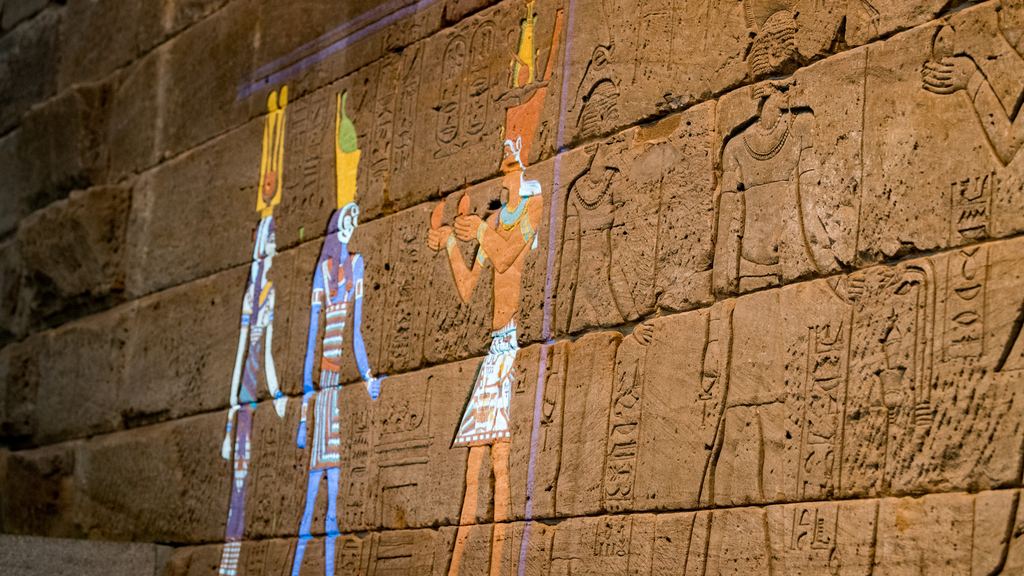
On the day we counted, 51 of the Fifth Avenue galleries were marked closed. Most belong to two long closures. The modern and contemporary galleries and the roof garden were emptied for the construction of the new Tang Wing, with a reopening the museum has announced for 2030. The galleries of Ancient West Asia and Ancient Cyprus are being renovated, and the museum has announced their reopening for 2027. The rest open and close at short notice. The Temple of Dendur (gallery 131) was marked closed from September 26, 2026 and open again on September 29, while five Egyptian galleries nearby, 116 to 120, were still marked closed. Treat any list of closures, this one included, as a snapshot, and check the museum's gallery closures page and its map on the day.
Gallery numbers also work as a rough address. The hundreds usually tell you the area: Egypt runs from 100 to 138 and Greece and Rome from 150 to 176, mostly on the first floor, European paintings fill the 600s and 800s on the second floor, the American Wing is the 700s, and the Cloisters rooms go from 001 to 020.
Who owns the Met: New York City or the museum?
Both, and the split explains a lot about how the Met works. When the trustees needed a building in the 1870s they could not pay for one, so the City built it with public money. The 1977 designation report of New York's Landmarks Preservation Commission describes the deal: the City kept "legal ownership of the museum building" while the trustees "retained ownership and control of the collections". The report adds that this became the pattern for most of the major art museums in America. The terms sit in a lease signed in 1878, still in force; the museum and the City amended it on October 24, 2013.
The museum itself is a private corporation, incorporated by an act of the New York State Legislature on April 13, 1870 and governed by a board of trustees. In a press release of June 2, 2026 the Met describes itself as a member of the City's Cultural Institutions Group, "a cohort of private, non-profit organizations on city-owned property", whose members receive City subsidies and capital investment and in return serve the public.
The City owns the Fifth Avenue building on Central Park land. The museum, a private non-profit, owns the collection. The pay-what-you-wish rule for New York State residents comes out of that arrangement.
The consequences are practical. Under the lease, admission rules need the written consent of the City's cultural affairs commissioner. That is why New York State residents still pay what they wish while visitors from elsewhere pay the full price, the policy since March 1, 2018 (our admission guide has the current rules). It is also the reason the museum could be built in Central Park at all: the park was public land, and a City-owned building was the way to put a museum on it.

Department, wing or gallery: how is the Met organised?
Guides often mix up three words that mean different things.
A curatorial department is a team of curators, conservators and technicians responsible for one part of the collection: Egyptian Art, European Paintings, Arms and Armor. It acquires works, studies them and decides what goes on the walls. The museum says it has seventeen, and our departments map lists all of them with their floors.
A wing is a part of the building, usually named after a donor: the Robert Lehman Wing (1975), the Michael C. Rockefeller Wing (1982, reopened on May 31, 2025 after renovation), the Henry R. Kravis Wing (1991). Wings and departments overlap but rarely match. The American Wing is both a department and a building. The Rockefeller Wing holds the arts of Africa, Oceania and the ancient Americas. The Temple of Dendur stands in a wing that carried a donor family's name until December 9, 2021 and has had no name since.
A gallery is one numbered room. The number is posted at the doorway, marked on the museum's map and repeated on every online object page ("On view at The Met Fifth Avenue in Gallery 760" is how Washington Crossing the Delaware is listed). For a visitor it is the one address that doesn't mislead.
The layers don't nest neatly. One department can sit in several places: Medieval Art and The Cloisters runs eight galleries on Fifth Avenue and the whole Cloisters building, and Asian Art spreads over the second and third floors. A gallery can also hold another department's work. The Spanish choir screen from Valladolid Cathedral, completed around 1763, dominates the Medieval Sculpture Hall (gallery 305), yet the museum catalogues it under European Sculpture and Decorative Arts.
| Term | What it is | Example | Why it helps a visitor |
|---|---|---|---|
| Curatorial department | The staff unit that owns and shows one part of the collection | Egyptian Art | Its web pages describe the collection and its current displays |
| Wing | A section of the building, usually named for a donor | Robert Lehman Wing | Tells you where you are; one wing can house several departments |
| Gallery number | A single room, numbered at the door | Gallery 131, Temple of Dendur | The address you look up on the map and on object pages |
| Site | One of the two buildings | The Met Cloisters | Same ticket, same day, but a long subway ride apart |
What is changing at the Met before 2030?
The largest project in decades is under way. Ground was broken on September 15, 2026 for the Tang Wing, a new wing for modern and contemporary art designed by Frida Escobedo, which the museum has announced for 2030. The Cantor Roof Garden, closed since October 2025, is to return with it, enlarged, on the fourth floor, according to the same announcements. Until then the modern collection is mostly off view, with a few works hung in other departments' galleries. Dates, the building's size and the fundraising figures are on our history page, which also explains why a widely quoted $550 million is not the cost of the wing.
Read more about the museum
Each page covers one question in depth, with dates and sources.
History, 1870 to 2030
Founding, the move into Central Park, Dendur, the Breuer years, admission rules and attendance, each dated.
Departments and collections
The 17 departments, the floor and galleries of each, and works we checked on view.
Myths and curiosities
What guides get wrong about the Met, and the stories that turn out to be true.
Glossary
Accession numbers, period rooms, lecture badges and the other words you meet inside.
Open Access images
How to find and use the museum's free public-domain images, and what isn't free.
The Met Cloisters
The medieval branch in Fort Tryon Park: getting there, hours and what to see.
What tours actually show you
Our analysis of the guided tours on sale: galleries named, meeting points, gaps.
Questions about the Met as an institution
Is the Metropolitan Museum of Art public or private?
Both, in different senses. The museum is a private, non-profit corporation run by trustees, incorporated by New York State in 1870. The Fifth Avenue building belongs to the City of New York, which leases it to the museum under an 1878 lease and supports its operations.
Is the Met in Central Park?
Yes. The Met Fifth Avenue stands on Central Park land along Fifth Avenue between 80th and 84th Streets, its home since 1880. The Met Cloisters is in a different park, Fort Tryon Park in northern Manhattan.
How many works of art does the Met have?
The museum says more than 1.5 million objects. About 500,000 are catalogued in its online collection (502,881 API records on September 29, 2026), and only tens of thousands are on view at any one time.
How many departments does the Met have?
The museum counts seventeen curatorial departments. Its public Collection API shows 19 entries, because it lists the Cloisters on its own and includes the libraries. Conservation, education and other departments are not counted among the seventeen. Full list: departments and collections.
Are the Met and the Met Cloisters the same museum?
Same institution, two buildings. A ticket bought for one is valid at the other on the same day (September 2026). Plan the trip between them: the Cloisters is near the northern tip of Manhattan. See our Cloisters guide.
Is the Met Breuer still part of the Met?
No. The Met Breuer on Madison Avenue was a Met site from March 18, 2016 until the COVID-19 closure of March 2020. It never reopened, and the building passed to the Frick Collection in August 2020.
Does New York City pay for the Met?
In part. The City owns the Fifth Avenue building and, in the museum's words, "has long provided essential operating support". Admissions, memberships, donations and the endowment pay for the rest, a mix the museum calls its "varied income streams".
Planning the visit itself?
Tickets, opening hours, getting there, rules and routes for two hours, half a day or a full day are in our visit planner.
Data verified on. Museum figures read from its content system and Collection API on 29 Sept 2026; the gallery count is ours, from the museum's own records. Editorial Policy