




A guided tour of the Metropolitan Museum shows you, in practice, European paintings, Egypt and the American Wing, in about two hours, starting from the Great Hall. We read every tour in this site's four Met categories on 29 September 2026 and recorded which galleries, departments and works each one names. European paintings come up in two tours out of three, Egyptian art in three out of five, the American Wing in just over half. Other big collections barely register: the Costume Institute appears in no tour at all, and neither does the Michael C. Rockefeller Wing (Africa, Oceania and the ancient Americas), and Asian art, one of the largest departments in the building, appears in about one tour in twenty-five.
There's nothing sinister in that. A two-hour product has to please first-time visitors in a building with about 450 numbered galleries, so it sticks to the famous rooms. Still, it is worth knowing before you pay, because it tells you what a tour adds (a guide's stories about the famous rooms) and what it will not give you, whatever the title says.
A listing describes the operator's plan. Whether the rooms are open is another matter: on the day we read the catalog, several tours still named closed galleries, and the museum's group guidelines say outright that it "cannot guarantee access to all galleries at all times". Check the museum's Gallery Closures page before you go.
Which galleries and works do Met tours name most often?
The table counts a tour once for each gallery or work its own text names, however many times it names it. Percentages are shares of the tours in the catalog, rounded; we publish proportions rather than counts because tours are added and withdrawn every month, and the shape of the table matters more than any single number. The last column is the status in the museum's records on the same day, so you can see which promises the building could keep.
| Gallery, department or work | Share of tours | In plain words | Status on 29 Sep 2026 |
|---|---|---|---|
| European paintings (any) | 67% | Two in three | Open (600s and 800s) |
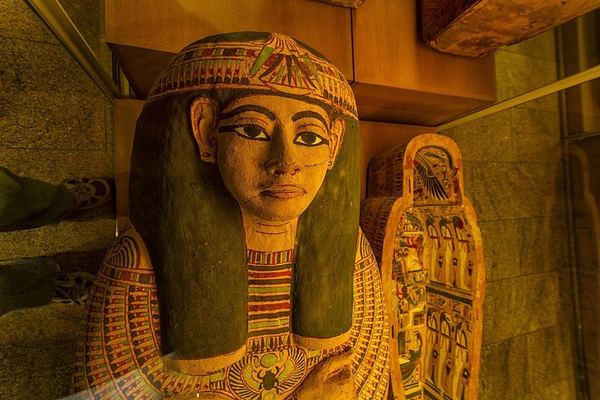
| Egyptian art (any, incl. Dendur) | 62% | Three in five | Open except rooms 116-120 |
| American Wing (any) | 54% | Just over half | Open except 719 and the Luce Center (773-774) |
| Impressionists and Post-Impressionists | 54% | Just over half | Open (818-826) |
| Greek and Roman art | 42% | About two in five | Open except 168 and 173-176 |
| Temple of Dendur | 42% | About two in five | Open again from 29 Sep (gallery 131) |
| Van Gogh | 42% | About two in five | On view (822, 825) |
| Modern and contemporary (any) | 42% | About two in five | Galleries closed (Tang Wing announced for 2030); a few works shown elsewhere |
| Period rooms, architectural salvage | 38% | More than one in three | Open (701, 745, 501, 534) |
| Arms and armor | 33% | One in three | Open (371) |
| Vermeer | 33% | One in three | On view (614) |
| Henry VIII's armor | 29% | Under one in three | Two in 371: the 1527 garniture ("probably" his) and a 1544 field armor |
| Washington Crossing the Delaware | 29% | Under one in three | On view (760) |
| Medieval and Byzantine art | 29% | Under one in three | Open (300-305) |
| Picasso | 29% | Under one in three | Gertrude Stein on view (965) |
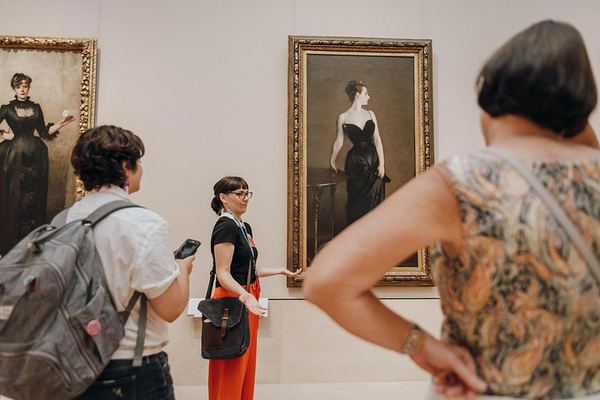
| Madame X (Sargent) | 21% | One in five | On view (771) |
| Chicago Stock Exchange staircase | 21% | One in five | On view (701) |
| Monet | 17% | One in six | On view (819) |
| Studiolo from Gubbio | 17% | One in six | On view (501) |
| Rembrandt | 12% | One in eight | On view (616) |
| Boscoreale bedroom (Roman villa) | 12% | One in eight | On view (165) |
| Ancient Near East, Assyria | 8% | One in twelve | Closed (400-406), new galleries announced for 2027 |
Two readings stand out. First, single works carry the listings: Van Gogh is named by about two tours in five, Vermeer by one in three, Leutze's Washington Crossing the Delaware and Henry VIII's armor by just under one in three. Second, "Henry VIII's armor" is two objects, and the listings rarely say which. The Arms and Armor Court (gallery 371) shows a richly decorated garniture dated 1527, which the museum calls "Probably of King Henry VIII of England", and an Italian field armor of about 1544 that, according to the museum, the king wore on his last campaign against the French. The listings that describe what they show (armor "made for" the king, or read as Renaissance fashion) point to the garniture, whose attribution the museum hedges; the ones that say "worn by Henry VIII" could mean either.
Most of the named works were where the tours say they are. We checked each one in the collection database on the same day: Vermeer in gallery 614, Van Gogh in 822, Madame X in 771, the Sullivan staircase in 701, the Gubbio Studiolo in 501, the Boscoreale bedroom in 165. The Antioch "Chalice", named by one tour, belongs to the Cloisters collection but is shown on Fifth Avenue in gallery 300, so that tour was right to include it.

Do Met tours all follow the same route?
Largely, yes. Read side by side, the itineraries fall into two families that together make up more than a quarter of the catalog, each with a recognizable core. The first, a set of related listings from one operator (about one in five of the catalog), always pairs the arms and armor galleries and Henry VIII with the Chicago Stock Exchange staircase and the Dutch and French paintings, usually adding the Gubbio Studiolo and Washington Crossing the Delaware. The second starts in Egypt with the Temple of Dendur, moves through the Greek and Roman galleries and takes in Madame X.
Put those together and you get the museum most visitors are sold: a line from the Egyptian wing through the armor court to the American Wing, then upstairs to Vermeer and Van Gogh. It is a good line. It is also the one you can walk alone with a floor plan; our two-hour routes are close to it, with gallery numbers.
The themed tours break the pattern, which is their point. About one in five tours has a theme, and none of them names the Temple of Dendur. Among the plain highlights tours, by contrast, half do.
What do almost no Met tours show you?
These are the departments that tours skip, ranked by how much you lose by assuming a tour will cover them.
- The Costume Institute: 0%. No tour names it, and the reason is written in the museum's rules: "lecturing is not permitted in special exhibitions". The Costume Institute's shows are special exhibitions. If it is on your list, go on your own; your ticket covers it on the day.
- The Michael C. Rockefeller Wing: 0%. The galleries of Africa, Oceania and the ancient Americas reopened on 31 May 2025 after a full rebuild, and not one listing mentions them. It sits on the south side of the first floor, off the standard line.
- Asian art: about one in twenty-five. One tour names the Asian galleries, alongside Egyptian and European art. The Astor Court, a Ming-style garden court in gallery 217, is on no itinerary.
- The Met Cloisters: about one in twenty-five, and only as a reminder that the ticket gives same-day entry there. No tour goes uptown. See our Cloisters guide.
- The roof: 0%. Here the silence is correct: the Cantor Roof Garden has been closed since 19 October 2025, and the museum has announced its reopening for 2030.
Several rooms that tours pass through are also barely named: the Tomb of Perneb, the Vélez Blanco Patio and the Robert Lehman Collection each appear in about one tour in twenty-five. Our explanation is logistics rather than taste: a two-hour walk that has to include Egypt, the armor court, the American Wing and the Impressionists has no time left for the corners of the building.

Where do Met tours meet, how long do they last, and what do they include?
The formats vary even less than the routes. For five tours in six the meeting point is the Great Hall, usually at the seated pharaoh to the right of the information desk, so you meet your guide only after clearing security. Only about one in four says so explicitly. The others meet outside, all of them private tours, or give only the museum's street address, as the tours sold through Tiqets do.
On admission, just over half of the tours name the Met ticket in their inclusions. Most of the rest use platform boilerplate such as "All entrance fees", which is not the same promise; our guide to choosing a Met tour explains what to ask. A private family tour did not mention admission anywhere.
| Measure | Value | Share of tours |
|---|---|---|
| Duration | 2 hours | 67% |
| Duration | 2.5 hours | 21% |
| Duration | 90 minutes, or 5.5 hours with Central Park | 12% |
| Format | Shared | 67% |
| Format | Private | 25% |
| Format | Semi-private, capped at 8 | 8% |
| Theme | Highlights / themed / family, language or park combo | 58% / 21% / 21% |
| Meeting point | Great Hall, by the seated pharaoh statue | 83% |
| Meeting point | Outside the building / address only | 8% / 8% |
| Admission | Met ticket named explicitly | 54% |
| Admission | Generic wording only ("All entrance fees") | 38% |
| Admission | Implied by the text, or not stated | 8% |
| Wednesday closure | Stated in the listing | 54% |
Which closed galleries do tours still name?
This section has the shortest shelf life on the page, so every line has a date. On 29 September 2026 the museum's records showed these closures, and this is how the tours dealt with them:
- Ancient Near East (galleries 400-406), closed; the museum plans to open its new Ancient West Asia and Ancient Cyprus galleries in 2027. About one tour in twelve names them. Both mentions carry a warning, but for one tour the only stop in its structured itinerary is the closed gallery. The Assyrian lamassu had no gallery number in the collection database.
- Modern and contemporary art, in transition until the Tang Wing opens (the museum's date is 2030). About two tours in five name modern art or a modern artist. Three in five of those warn that the galleries are closed; the rest name Picasso or Dalí with no caveat. A few signature works are still on view elsewhere: Pollock's Autumn Rhythm in gallery 899 and Picasso's Gertrude Stein in gallery 965.
- Egyptian rooms 116-120 and the Roman gallery 168, marked closed at the end of September. No tour names these rooms.
- The roof, closed, with a reopening the museum has announced for 2030. No tour names it.
The Temple of Dendur shows how fast this moves. The museum's gallery record for room 131 was marked closed from 26 September, with no reason given, and was marked open again on the morning of 29 September (New York time), the day of our reading. Every tour that names the temple (about two in five) carries a caveat somewhere in its description, but always worded as a possibility, and in about one tour in six the itinerary stop itself names the temple with no caveat. Treat any tour promise about a specific room as a plan, and look the room up the morning you go.
How did we measure what Met tours show?
The method is simple enough to repeat, which is the point: we will run it again whenever the catalog changes, and the date at the top of the page will move with it.
- Scope. Every tour listed on 29 September 2026 in the site's four categories set inside the museum: guided tours, Egyptian art and the Temple of Dendur, tickets and self-guided visits, and the Bible and the ancient world. A tour that appears in two categories is counted once. Walking tours of Central Park and Fifth Avenue, and tickets to other museums, are excluded.
- Fields read. For each tour: the title, the description, each itinerary stop and the list of inclusions. The meeting-point text and the practical notes are not used for gallery matching, and neither are image titles.
- Cleaning. Before matching we remove every sentence that mentions the pharaoh statue, because it is always the meeting point and never a stop, and phrases that describe the collection's span ("from ancient Egypt to modern art"), which name departments without visiting them.
- Matching. One case-insensitive keyword rule per row of the table, written to avoid false hits: "Egyptian" does not count when the sentence says Egypt was a Roman province; "Asian art" does not count when it is "West Asian"; the Rockefeller Wing counts on "Rockefeller Wing", "Africa" or "Oceania".
- Counting. A tour counts once per row. Shares are rounded to the nearest percent.
- Status. Each named gallery or work was checked the same day in the museum's collection API and its public content system, which records whether each gallery is closed and when that record last changed.
There are limits worth stating. The descriptions on this site are our own rewrites of the operators' text, so "named" means named on our pages; an operator detail we dropped is not counted. A few matches are thin (a tour that offers American portraits only on request still counts for the American Wing). And the tour records carry no start times, so we cannot say whether mornings or afternoons are better served.
How can you use this to choose a Met tour?
- Write down the three things you would regret missing. If one is the Costume Institute, a special exhibition, the Asian galleries or the Rockefeller Wing, no tour in our catalog will take you there. Plan that part on your own, before or after the tour.
- If your list is Egypt, armor, the American Wing and the Impressionists, almost any highlights tour will do. Choose on group size, admission wording and reviews, not on the itinerary.
- Look up every room a tour promises on the museum's Gallery Closures page the day before and the morning of your visit.
- Discount modern art promises until the Tang Wing opens (announced for 2030), unless the listing names a work you can find on view.
- For a second visit, take a themed tour. It is the only kind that reliably leaves the standard line.
What Met tours show: questions and answers
Which Met tours include the Temple of Dendur?
About two tours in five name it, mostly the plain highlights tours; none of the themed tours does. The room's status changes, so check the museum's Gallery Closures page before you go.
Does any tour visit the Costume Institute exhibition?
No tour in our catalog names it. The museum does not allow outside guides to lecture in special exhibitions, so visit it on your own with the same ticket.
Do Met tours cover Asian art?
Almost never: about one tour in twenty-five names the Asian galleries. Add them yourself; the Astor Court is gallery 217 on the second floor.
Do Met tours still visit the modern art galleries?
In September 2026 the modern and contemporary galleries were closed until the Tang Wing opens, which the museum has announced for 2030. About two tours in five still name modern art, and two in five of those give no warning.
How often is this analysis updated?
We repeat it whenever the tour catalog changes, with the same method. The date of the last reading is shown at the top of the page and in the source note.
The guided tours we analyzed
Shared, private and themed tours of the Metropolitan Museum. Most follow the route described above.
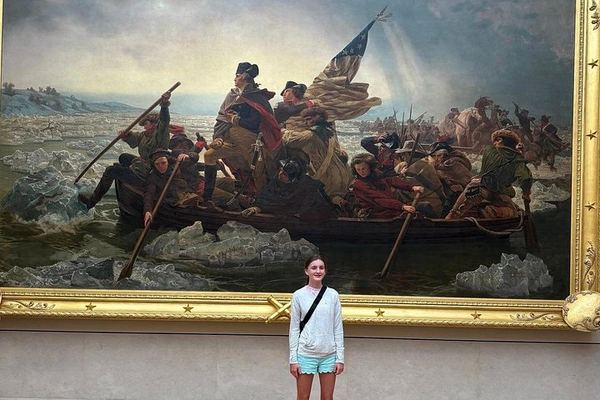
Family-Friendly Private Tour of the Metropolitan Museum of Art
Henry VIII's armor, a Chicago Stock Exchange staircase and Van Gogh, told as stories for kids and teens on a private 2.5-hour Met tour. Entry fees included.
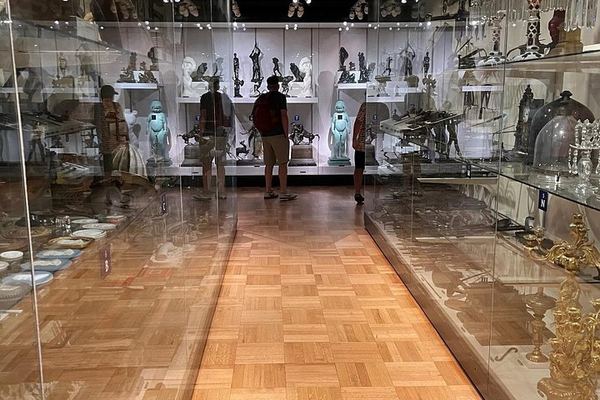
Ghost Stories at the Met: A Macabre, Interactive Museum Tour
Flying Dutchmen, funerary masks and eerie still lifes: a two-hour themed Met tour with handouts and activities, museum ticket included. Best for ages 10 and up.
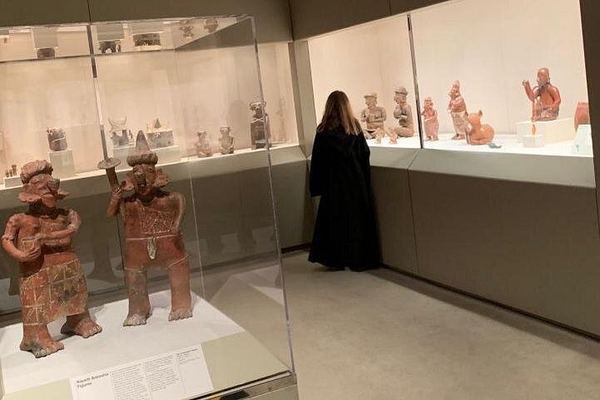
Griffins, Goblets and Gold: Interactive Magical Arts Tour at the Met
A wizard's-eye view of the Met: griffins, goblets, part of a real castle and hands-on activities, supplies provided. Two hours, up to 6 per booking, ages 8+.
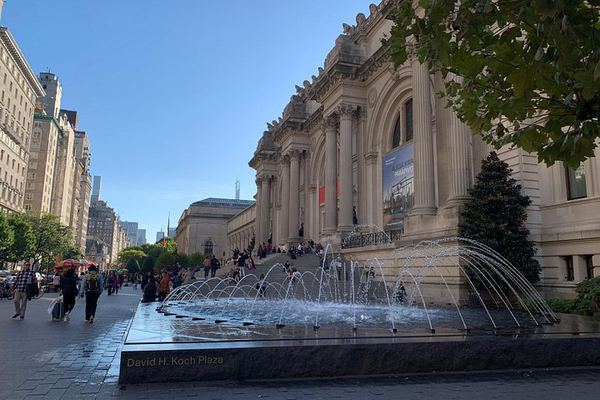
Met Museum Highlights and New York Stories Guided Tour
Egyptian tombs, Roman frescoes, Henry VIII's armor and the Impressionists, tied to New York's own story. 2.5 hours, fees included; the Met shuts Wednesdays.
Met Museum Highlights in Two Hours with an Expert Guide
An art guide leads up to 18 people past Monet's Water Lilies, Madame X, Rodin and the Tomb of Perneb in two hours, admission included. You stay on afterwards.
Met Museum Highlights Tour by City Wonders, Entry Ticket Included
City Wonders guides up to 20 people through the Met in two hours, entry ticket included: the Egyptian and American wings, Velazquez, Rembrandt and Van Gogh.
Ratings collected by Viator and Tripadvisor
Deciding between tours?
Group size wording, admission wording, the museum's rules for outside guides and a red-flag checklist.
Data verified on. Tours read on 29 Sep 2026 via the site's catalog; galleries and works checked the same day in the Met's collection API and CMS. Repeated when the catalog changes. Editorial Policy