



Designing the Gilded Age at the Met Museum: Tiffany on Fifth Avenue
Nearly 120 Tiffany drawings open at the Met on October 22, 2026. The Gilded Age room you can actually stand in is one floor below, on permanent display, and its house was demolished in 1938.

Designing the Gilded Age opens at the Met Museum on October 22, 2026, and it is a show about drawings: nearly 120 sheets from the studios of Louis C. Tiffany, watercolors and working sketches that the museum says have never been studied in depth. What it is not is a Gilded Age house. For a room from one of those, you go down one flight of stairs into the American Wing, where an interior from a demolished address on West 54th Street has been standing, unticketed and unadvertised, for years.
The house that room came from was pulled down in 1938. That is the short answer to why the Gilded Age is so hard to see from the inside in New York: the avenue kept its address and lost most of its interiors, and the rooms that survived mostly ended up in museums. On September 30, 2026 we read the museum's press release, its gallery texts and its collection database to work out what this autumn actually offers someone who arrives in the city with the television series in their head. Two of the best things turned out to be permanent, free with the ticket, and easy to miss.
What is Designing the Gilded Age at the Met Museum?
The full title is Designing the Gilded Age: Drawings from the Studios of Louis C. Tiffany. The museum's own listing gives the dates as October 22, 2026 to February 7, 2027 and places it in galleries 691, 692 and 693, three special exhibition rooms on the second floor at Fifth Avenue. The listing carries no ticket price of its own, which in the Met's system means the show is covered by whatever you paid at the desk. That is worth saying plainly, because several of the exhibitions people fly in for at other New York museums are not.
The press release of July 28, 2026 puts the count at "nearly 120 works from the Museum's collection, along with a select group of key loans". The three rooms are arranged by theme: designs for domestic interiors, for churches and other religious settings, and for public and commercial commissions, with Tiffany's work in lighting running alongside. Finished pieces come out of storage to sit beside the drawings that produced them, which is what makes it a show rather than a folder of paper.
One line in that release is easy to skim past and is the reason the show is worth a detour. Many of the drawings are the only surviving record of what they describe: the museum's wording is that they document works "lost, altered, or never realized". Where that is true, the watercolor in the case is not a study for the object. It is the object.
The museum also names the people the drawings have been credited to, which older accounts of Tiffany tended to skip. The release lists Frederick Wilson, Jacob Holzer, Agnes Northrop, Clara Driscoll and Julia Munson among the designers in the studios, and says many of them were historically uncredited. Tiffany ran the studios; a good deal of what carries his name was drawn by somebody else, and several of those somebodies were women or recent immigrants.
One small inconsistency, since we checked both texts on the same day. The press release says the material spans "the early 1890s through the 1920s". The museum's own exhibition listing says the commissions date "from the mid-1880s through the 1920s". We have no way to reconcile those from outside, so we are reporting both rather than picking the one that sounds better.
A major loan from the Chrysler Museum of Art reunites its monumental stained-glass window, Woman in a Pergola with Wisteria (1911), with the original wisteria transoms designed for the work. Recently discovered in a private home in Arizona, the transoms make possible the ensemble's first presentation together in at least half a century.
The window somebody found in a house in Arizona
That paragraph is the news in the exhibition, and it repays reading twice. A window made in 1911 has spent some part of the last century separated from the panels designed to sit above it. The transoms turned up in a private house in Arizona. The window itself belongs to the Chrysler Museum of Art in Norfolk, Virginia, and is traveling to New York so the three pieces can be shown as one thing again for the first time in at least fifty years.
The museum's curator of American decorative arts, Alice Cooney Frelinghuysen, is quoted calling the Met's holding "the largest collection of Tiffany design drawings anywhere" and describing the effect of putting windows next to the drawings for them as "the transformation of an idea into a luminous work of art". Take the sales pressure out of that and a plain claim remains: this is the only place the comparison can be made at this scale, and it stops on February 7, 2027.
A practical footnote for anyone planning to write about the show or use its pictures. We checked the Met's collection database on September 30, 2026 and the Tiffany design drawings are not in the public domain. Every drawing we tested came back marked as not public domain, and so did the museum's famous Autumn Landscape window in gallery 700. The Met's Open Access program covers a great deal of the collection, and this corner of it is an exception. Finished Tiffany objects are a different story, which is convenient, because the best of them are downstairs anyway.
Is there a Gilded Age room at the Metropolitan Museum?
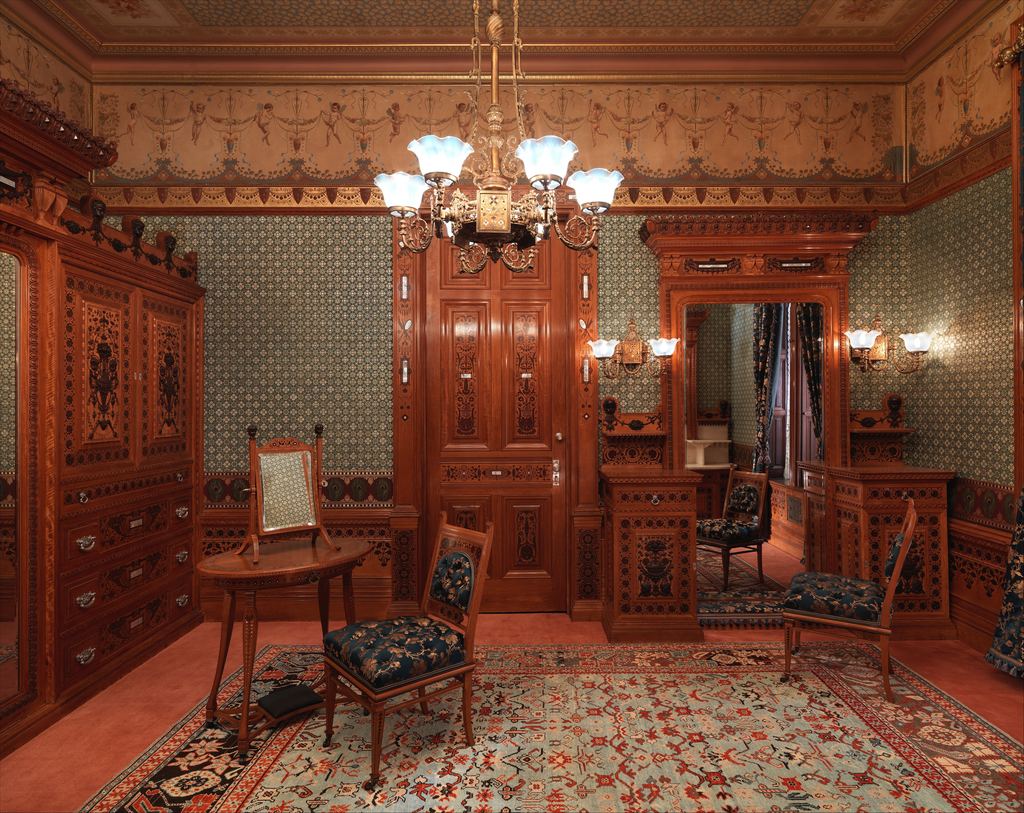
Yes, and it is not in the exhibition. It is gallery 742, on the first floor of the American Wing, and the museum calls it the Worsham-Rockefeller Dressing Room. Its own gallery text, which we read on September 30, 2026, describes it as "a jewel box of a room and a quintessential expression of the Aesthetic movement" and gives the address it came from: the house at 4 West 54th Street belonging to Arabella Worsham, who commissioned the decorating firm of George A. Schastey in 1881. The collection record for the woodwork dates the work 1881 to 1882 and lists it, that morning, as on view in gallery 742.
Gallery 742, first floor
The room that outlived its house
Satinwood and purpleheart inlaid with mother-of-pearl, a painted frieze, patterned wallpaper, a gas chandelier. This is a dressing room, not a drawing room: the place where a woman of that income put on the clothes the rest of the house was designed to show off.
The Met's period rooms are looked at from the threshold rather than walked through, so plan on standing at the opening and taking your time rather than on a circuit of the floor. There is no extra charge and no booking.
The museum has published a longer piece on the room, "Arabella Worsham's Closet", written by the American Wing research assistant Moira Gallagher, which we read in the museum's own content system on September 30, 2026. It fills in the biography and, along the way, the reason the room exists in a museum at all. Worsham (about 1850 to 1924) came to New York from Richmond, Virginia after the Civil War with the financial backing of the railroad magnate Collis P. Huntington, whose mistress she was and whose wife she later became. She hired Schastey to rebuild the townhouse. The townhouse was demolished in 1938, and the dressing room is what is left of it.
The lavish interiors that Schastey created, captured in the dressing room's opulent decorative scheme, signaled Worsham's arrival into financial security; however, her questionable status as a mistress often excluded her from elite circles.
Anyone who has watched a season of the HBO series will recognize the shape of that sentence. New money, a house built to argue with the neighbors, a door that stays shut anyway. The difference is that this one is documented down to the name of the cabinetmaker, and the room is right there in front of you.
One thing we could not establish, and would rather say so. The room is called Worsham-Rockefeller, and neither the museum's gallery text nor its article on the room explains the second half of the name. We searched the museum's published texts for the street address and found nothing further. If you want the Rockefeller connection spelled out by the institution that owns the room, it is not, as far as we can find, spelled out anywhere the museum publishes.
What looks like Gilded Age New York at the Met and is not
This is where visitors get confused, and it is a forgivable mistake, because the room in question is the most theatrical space in the building. Gallery 701, the south end of the Charles Engelhard Court on the first floor, contains a pair of two-story staircases, heavy with cast ornament. They are Louis H. Sullivan's staircases of 1893 from the Chicago Stock Exchange Building, saved when that building came down. They are Gilded Age, and they are not New York.
The loggia they stand around is Tiffany's, and it is also not a Fifth Avenue interior. The museum's gallery text calls it "the exotic entrance loggia designed by Louis C. Tiffany for Laurelton Hall, his country estate on Long Island". The collection record dates the architectural elements to about 1905 and places them, as of September 30, 2026, in gallery 701. Same designer as the exhibition upstairs. Different county.
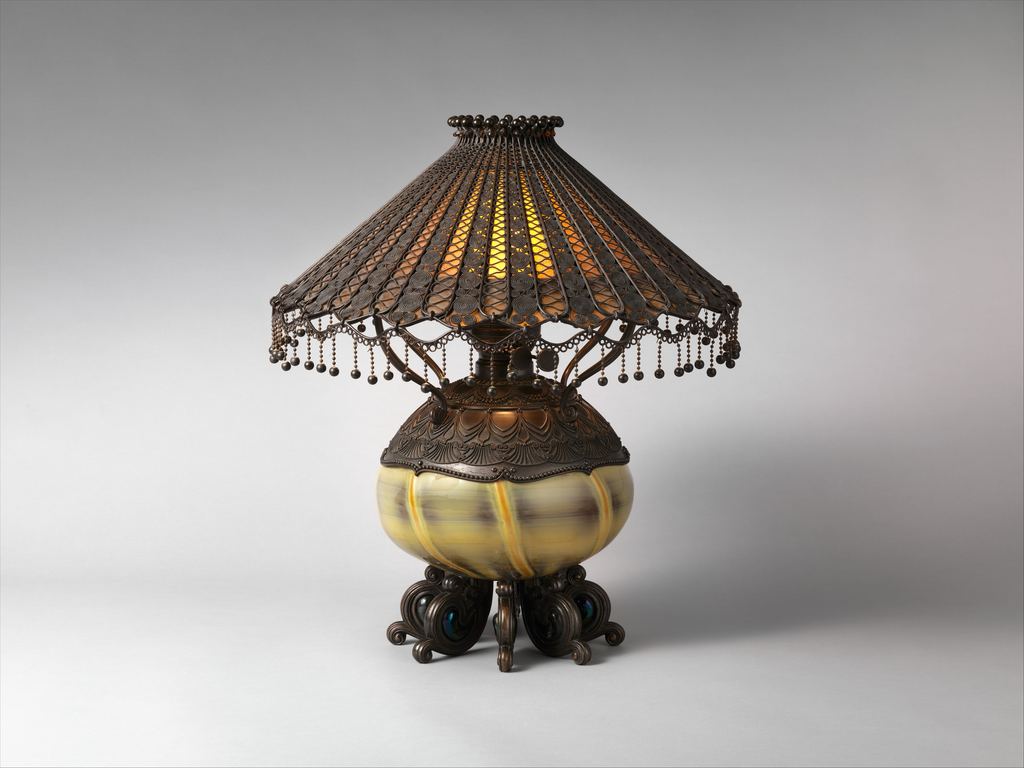
Next to the dressing room, gallery 743 is the one people should be told about and are not. The museum's description names it the Deedee Wigmore Gallery and says it is divided into three areas, one of them given to "the art of Louis C. Tiffany". The table lamp pictured above lives there. When the exhibition closes on February 7, 2027, gallery 743 does not close with it, and this is the practical reason the Tiffany question at this museum has an answer all year round rather than for fifteen weeks.
| What | Where | Until when | Gilded Age New York? |
|---|---|---|---|
| Designing the Gilded Age: Tiffany drawings | Galleries 691-693, second floor | February 7, 2027 | Designs for commissions across the US and abroad |
| Worsham-Rockefeller Dressing Room | Gallery 742, first floor | Permanent display | Yes: 4 West 54th Street, 1881-82 |
| Tiffany, Aesthetic and Arts and Crafts gallery | Gallery 743, first floor | Permanent display | Tiffany objects, not a New York room |
| Tiffany's Laurelton Hall loggia | Gallery 701, first floor | Permanent display | No: his Long Island estate, about 1905 |
| Sullivan's Stock Exchange staircases | Gallery 701, first floor | Permanent display | No: Chicago, 1893 |
| The surviving mansions themselves | Fifth Avenue, roughly 70th to 91st | Standing | Yes, but nearly all from the sidewalk |
Seeing Designing the Gilded Age at the Met Museum in one afternoon
The route is short because the two halves of it are one staircase apart. Start on the second floor in galleries 691 to 693 while your eyes are fresh, since drawings are small and there are a great many of them. Go down to the first floor for gallery 742, then gallery 743 next door, then walk through to gallery 701 for the loggia and the staircases. Everything on that list is included in the admission you already paid, and the whole of it is in the American Wing.
Then the things that catch people out. The museum is closed on Wednesdays. Adult admission is $30, $22 for visitors 65 and over, $17 for students, and free for children 12 and under. Pay-what-you-wish is not a tourist discount: it is for residents of New York State and for students from New York, New Jersey and Connecticut, and the details are on our admission page. The ticket is good for the same day only, at both Met sites, exhibitions included, and it has been that way since September 12, 2020, whatever the older pages still say about three days.
There is also nothing to book. The museum's Plan Your Visit page says advance tickets are not required, and there is no timed entry for general admission. What that means for the shopping around you may be doing: at the Met, "skip the line" buys you nothing, because the only queue everyone has to stand in is the security check, and no ticket of any kind skips it. If you are choosing between products, our guide to choosing a Met tour goes through what each type actually includes, and the itineraries page fits the American Wing into one or more days in the neighborhood.
What a Fifth Avenue walking tour can and cannot do
If the exhibition is the reason you are booking a guide, read this first. The museum's group guidelines require advance registration for third-party guided tours of any size, require the guide to hold a lecture badge from the museum, and then add a line that changes the value of the booking: "lecturing is not permitted in special exhibitions". A guide can bring you into the building and talk to you in the American Wing. Inside galleries 691 to 693, you are on your own with the labels.
Outside, the picture is different, and we can be exact about it because we count our own catalog rather than estimating. On September 30, 2026 this site listed 13 walking tours on Fifth Avenue and the Gilded Age. Exactly one of them lists going inside a house: a two-hour walk whose itinerary includes a stop at 972 Fifth Avenue described as going through the front door, and which names "access to mansions" among what the price covers. That walk also stops at the Met to talk about the Gala, with museum admission listed as an extra cost, which is accurate rather than sneaky. The other twelve read the houses from the street.
That ratio is the honest summary of Gilded Age New York on foot: the facades are public and the interiors mostly are not, which is why a room in a museum gallery is worth the detour. Prices on this site are shown in euros, because the affiliate catalog is priced in euros; the museum's own prices are in dollars, and we have kept the two apart above. Details of each walk, the stretch of avenue it covers and where it starts are on our Fifth Avenue mansions page.
Fifth Avenue walks, most reviewed first
The four most reviewed Gilded Age walks in our catalog on September 30, 2026. Only the first goes inside a house; the rest look at the facades from the street. None includes Met admission.
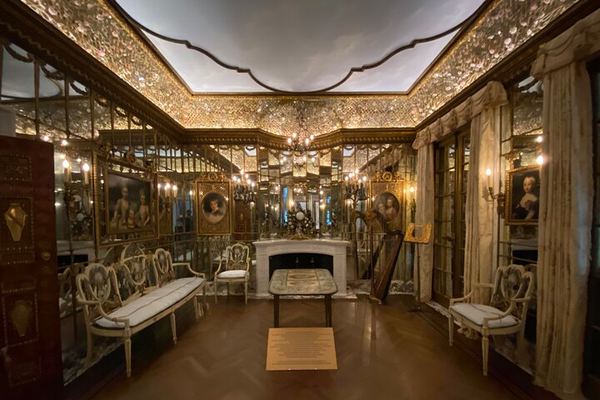
Gilded Age Mansions Tour: Fifth Avenue's Millionaire Houses, Inside and Out
A two-hour walk past the surviving Fifth Avenue mansions, with access inside some of them and stories of scandal, murder and the architects behind each house.
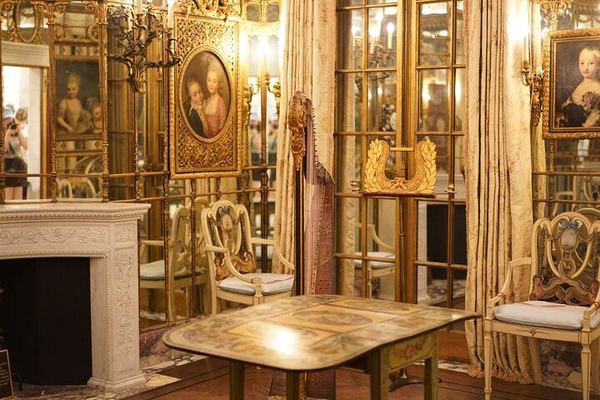
Millionaire's Row Walking Tour: Gilded Age Mansions of Fifth Avenue
Untapped New York walk from the Sherman statue to 79th Street: the footprint of a lost mega-mansion, the Frick story and a bookshop in a Fifth Avenue house.
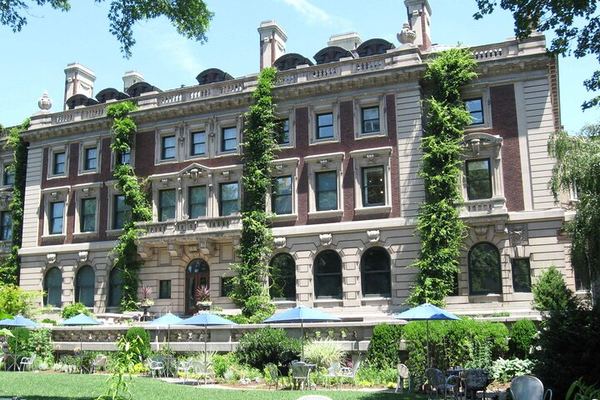
Private Gilded Age Walking Tour of Fifth Avenue: New York High Society
Your own licensed guide and group of up to 15 on a private two-hour walk from Grand Army Plaza up Millionaire's Row to the Cooper Hewitt mansion.
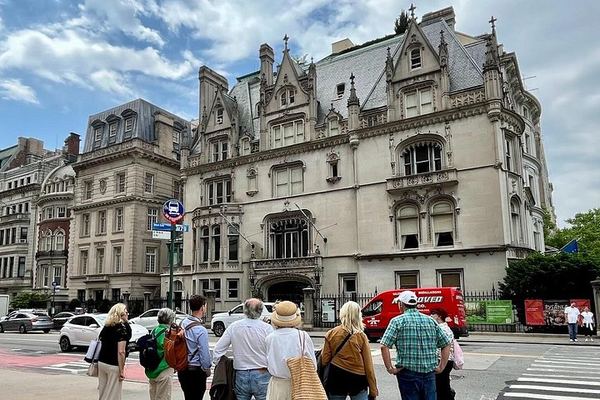
Bowery Boys Walking Tour: Gilded Age Mansions of Fifth Avenue, 70th to 91st Street
A Bowery Boys guide walks a mile of Fifth Avenue from the Frick to the Carnegie mansion, telling the stories behind each facade. Exteriors only, small bookings.
Ratings collected by Viator and Tripadvisor
The series, the season and which Met is which
Briefly, because this is not a recap site. The fourth season of The Gilded Age was announced by HBO on August 25, 2026 for Sunday, November 1, 2026, in eight episodes. That is ten days after the Tiffany exhibition opens, which is a piece of luck for anyone arriving in New York in November with the show fresh.
The naming problem is worth thirty seconds. In New York, "the Met" is at least three institutions: this museum, the Metropolitan Opera, and a baseball team. They are unrelated, and a period drama set in the 1880s has reason to mention more than one of them. If you are searching for opening hours or tickets and the results look wrong, that is usually why. The museum's own press release for the Tiffany show makes the connection it does claim: the Gilded Age "produced the major cultural institutions of New York and the nation, including The Metropolitan Museum of Art, founded in 1870". The museum is not a backdrop to that period. It is one of its products.
Where these facts come from
Everything dated in this article was read on September 30, 2026. The exhibition dates, the gallery numbers, the floors and the absence of a separate ticket come from the museum's own content system, which is the source behind its published pages; the listing for this exhibition was last edited on September 15, 2026. The counts, the quotations from the curator and the director, and the Chrysler Museum loan come from the press release of July 28, 2026. The descriptions of galleries 701, 742 and 743 are the museum's own gallery texts. Arabella Worsham's biography and the 1938 demolition come from the museum's article "Arabella Worsham's Closet" by Moira Gallagher.
Object dates, gallery assignments and public-domain status were checked one object at a time against the museum's collection database, which is also where we confirmed that the Tiffany drawings are not released for reuse. Admission prices, the Wednesday closure and the same-day rule come from the museum's Plan Your Visit page and its ticketing policy; the rule about lecturing in special exhibitions comes from the group guidelines. Tour counts, prices and itineraries were read from this site's own catalog on the same day. The HBO premiere date is the date announced by the network on August 25, 2026.
Two cautions we would rather state than bury. Galleries at the Met close at short notice, and the museum makes no promise that any particular gallery will be open on any particular day, so the numbers above describe the morning we checked and not the morning you arrive. And this site is independent: we are not affiliated with the Metropolitan Museum of Art, we do not sell its admission tickets, and we earn a commission on the walking tours listed above but not on anything the museum sells.
Questions people ask about the Tiffany show and the Gilded Age rooms
When is Designing the Gilded Age at the Met Museum?
October 22, 2026 to February 7, 2027, in galleries 691 to 693 on the second floor of The Met Fifth Avenue. Those dates come from the museum's own listing and from its press release of July 28, 2026, and both said the same thing when we checked them on September 30, 2026.
Is the Tiffany exhibition included in Met admission?
Yes. The museum's listing carries no separate ticket price, and its standard wording is that a ticket includes exhibitions and same-day entry to both Met locations. Adult admission is $30. There is no timed entry and nothing to book in advance.
Is there a Gilded Age room at the Metropolitan Museum?
Gallery 742, the Worsham-Rockefeller Dressing Room, decorated by George A. Schastey in 1881-82 for Arabella Worsham's house at 4 West 54th Street. It is on permanent display on the first floor, it is included in admission, and the house it came from was demolished in 1938. Like all the Met's period rooms, it is viewed from the doorway.
Where was The Gilded Age filmed?
Not in the Metropolitan Museum's galleries, which is the assumption that brings most people to this question. The houses the series portrays are private buildings on Fifth Avenue. Where the production actually films, and which of the surviving houses near the museum a visitor can go inside, is on our Fifth Avenue mansions page.
Which Met is the Met in The Gilded Age?
Depends on the scene. In New York the name belongs to this museum, to the Metropolitan Opera and to a baseball team, and they have nothing to do with one another. The museum was founded in 1870, which its own press release describes as one of the cultural institutions the Gilded Age produced.
Can a guide talk me through the Tiffany exhibition?
No. The museum's group guidelines state that lecturing is not permitted in special exhibitions, and third-party guided tours of any size have to register in advance and use a guide holding the museum's lecture badge. A guide can talk to you in the permanent galleries, including the American Wing.
Data verified on. Dates, galleries, prices and object records read from the museum's own content system and collection database on September 30, 2026. Editorial Policy