



NYC Marathon Spectator Spots: The Race Runs Behind the Met Museum
On November 1, 2026 the marathon leaves Fifth Avenue at 90th Street and runs behind the Met on the East Drive. We read the city's own closure notice and the museum's hours: the Met is open 10 to 5, and the sun now sets at 4:53 p.m.
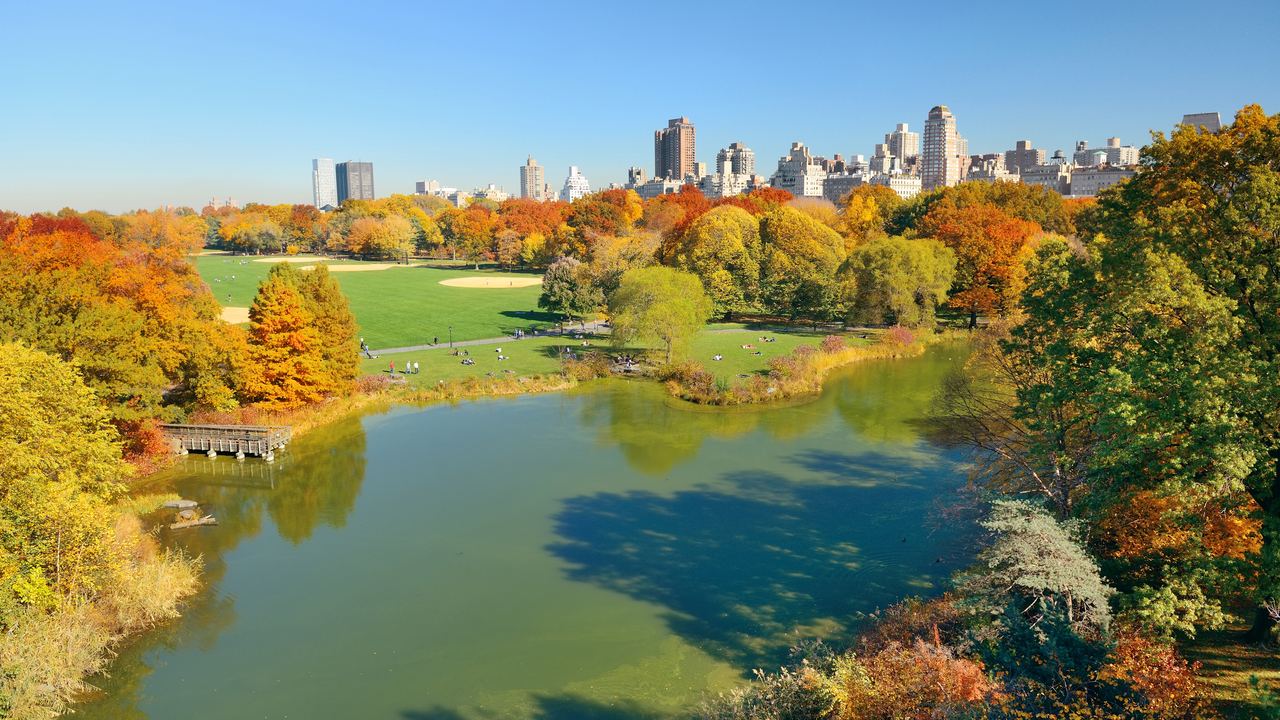
NYC marathon spectator spots are easy to find online, and most of the lists get one thing wrong: the race does not run past the Metropolitan Museum of Art. On Sunday, November 1, 2026, the course comes down Fifth Avenue from Harlem, turns left at 90th Street and disappears into Central Park. The museum is at 82nd. Eight blocks south of that turn, the Fifth Avenue sidewalk outside the Met will be about as busy as any other Sunday.
We checked that on October 15, 2026 against two sources that are produced by different people for different reasons. The organizer's own course description, read on September 30, has the race entering Manhattan over the Madison Avenue Bridge at 138th Street, running down Fifth Avenue to 90th, then into the park at Engineers' Gate and south on the East Drive, behind the museum. The City of New York's street closure notice for the race is a separate document from a separate office, and it closes Fifth Avenue from 120th Street down to 90th Street and stops. Not 86th. Not 82nd.
And there is a second thing about that Sunday which will affect a museum visit more than the marathon does. November 1 is the day the clocks go back. The sun sets over Central Park at about 4:53 p.m., an hour earlier than the evening before, and the Met closes at five. You will walk out of the building into the dark.
Does the NYC Marathon go past the Met Museum?
No. It turns off Fifth Avenue eight blocks north of it, and then it runs through the park behind it.
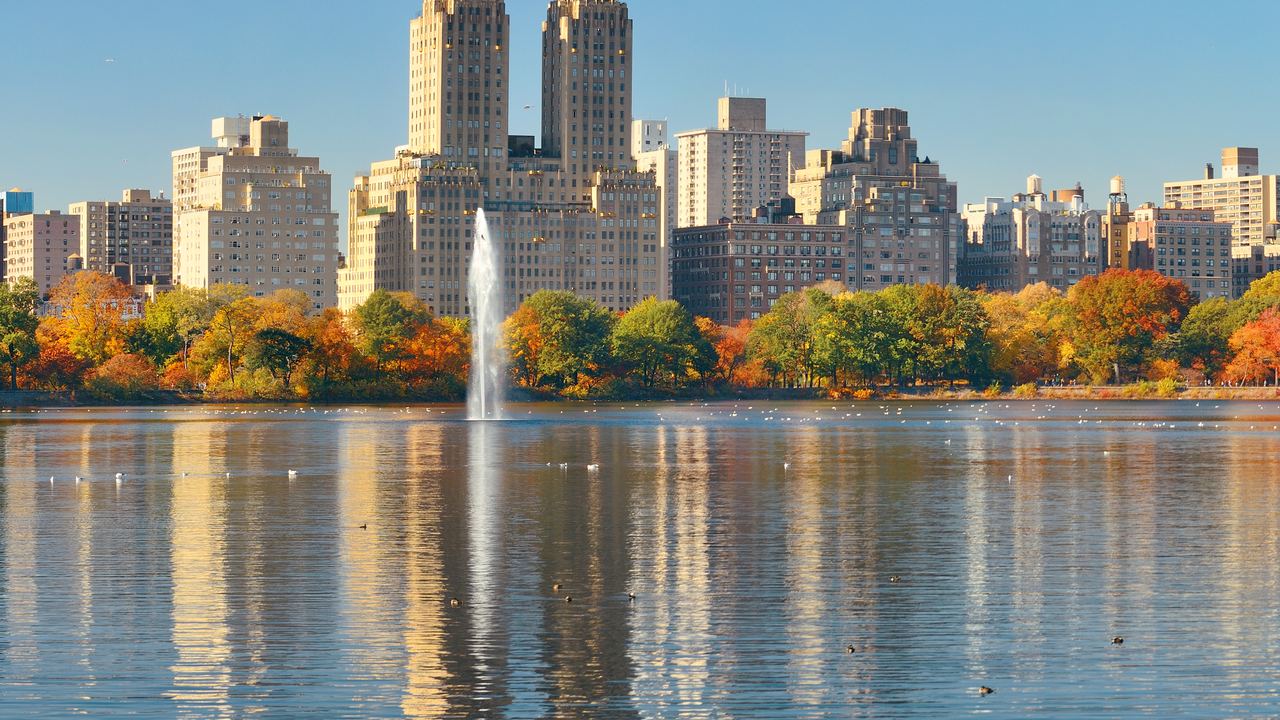
The confusion comes from a real thing, which is that the race is on Fifth Avenue for about thirty blocks and the Met is on Fifth Avenue. The two stretches do not overlap. Runners come off the Madison Avenue Bridge into Harlem, work south on Fifth past Marcus Garvey Park, and leave Fifth at Engineers' Gate, the park entrance at Fifth and 90th. From there the course is on the East Drive, which runs down the inside of the park past the Jacqueline Kennedy Onassis Reservoir and the Great Lawn, crosses to the west side and finishes inside the park.
The museum sits outside the park wall at 82nd. The East Drive at that latitude is a few hundred yards west of the building, screened by trees and a rise of ground. You can hear it. You cannot see the Met from the course or the course from the Met.
The other source of confusion is a real NYRR label. The organizer points spectators to "Fifth Avenue, East 90th Street to East 105th Street (Miles 23 to 24)" as a place to stand. That is a recommended viewing zone, not a description of where the course goes: the course runs the whole way down from 120th, and the zone is the part of it NYRR is willing to put crowds on. A few guides have quietly turned that zone into "the race runs on Fifth Avenue in the upper 90s and 100s," which is true, and then into "so it goes past the museums," which is not.
Fifth Avenue, 120th Street to 90th Street. Street Closed. Sunday Nov. 2, 9am to 7:30pm.
That single line from the city's own notice is the cleanest evidence we found. The city closes streets it needs to close and no others, and its list for Fifth Avenue ends at 90th.
What the city actually closes near the museum
Here is the part worth knowing even if you have no interest in the race. All three Central Park drives close, and so do two of the four crosstown transverses, which is how most taxis and buses get from one side of the park to the other. If you are staying on the Upper West Side and visiting the Met, that is your problem, not the runners.
One caveat we have to put up front. The city had not published its 2026 notice when we checked on October 15, 2026: the 2026 file is not online yet, and in previous years it has appeared in the last days of October. The table below is the 2025 notice, which is the most recent one that exists. Treat it as the shape of the day rather than the timetable, and look for the 2026 version before you go. The notice itself says closures happen on a rolling basis, are subject to change without notice, and are at the discretion of the NYPD.
| Street | Stretch | When |
|---|---|---|
| Fifth Avenue | 120th Street to 90th Street | Sunday, 9 a.m. to 7:30 p.m. |
| Fifth Avenue | 138th Street to 124th Street | Sunday, 9 a.m. to 7:30 p.m. |
| Fifth Avenue outside the Met, at 82nd | Not on the closure list at all | Open |
| 90th Street | Fifth Avenue to the East Drive | Sunday, 8:30 a.m. to 6:30 p.m. |
| East Drive, West Drive, Center Drive | The whole park loop | Saturday through Sunday |
| 79th Street Transverse | Across the park | Sunday, midnight to 9:30 p.m. |
| 65th Street Transverse | Across the park | Sunday, midnight to 9:30 p.m. |
| 86th Street Transverse | Not on the closure list | Open in 2025 |
| Central Park West | 59th Street to 77th Street | Sunday, 6 a.m. to 9:30 p.m. |
| Fifth Avenue, 86th to 96th | No parking, both days | Saturday through Sunday |
Read the eighth row twice, because it is the single most useful line on this page. In 2025 the 86th Street Transverse was not on the closure list while the 79th and the 65th were. The 86th is also the closest crossing to the museum. If that holds for 2026, a cab from the Upper West Side to the Met should be told to take 86th, and a driver who heads for the 79th will sit in it. We cannot promise it holds: the 2026 notice is the only thing that can, and it is not out.
Under the park, none of this applies. The 4, 5 and 6 trains at 86th Street are a five-minute walk from the museum's steps and the subway does not care about street closures, which is why our page on getting to the Metropolitan Museum puts the train first on any day with an event in it. Only the uptown local platform at 86th on the 4, 5 and 6 is accessible; 86th Street on the Q is accessible throughout.
Is the Met Museum open on NYC Marathon Sunday?
Yes. Sunday, November 1, 2026: 10 a.m. to 5 p.m., which is the museum's ordinary Sunday. We read that from the operating schedule in the museum's own content system on October 15, 2026, and checked the list of dated exceptions it keeps alongside. There are four for this season, and none of them is November 1: the Fifth Avenue building closes on November 26 for Thanksgiving, December 25, January 1, and May 3, 2027 for the Costume Institute Gala.
Worth saying because the museum says it: it does not guarantee access to any particular gallery at any particular time, and its gallery closures page is the only live record of what is shut. That is unrelated to the marathon and true every day.
The marathon falls on a Sunday, so the useful comparison is the day before. Saturday, October 31 is Halloween, and the Met is open until 9 p.m., because Friday and Saturday are the two late evenings. The sun sets that evening at about 5:54 p.m., so the last three hours are after dark in a building most people only see in daylight. The city's 2025 notice shows the Saturday closures sitting around 42nd Street, First Avenue and Sixth Avenue for the 5K that runs the day before the marathon, and on Central Park South for a couple of hours in the morning. Nothing near 82nd Street.
The hour you lose, and the sunset nobody plans for
Daylight saving time ends on the first Sunday in November under the schedule set by the Energy Policy Act of 2005, which for 2026 is November 1 at 2 a.m. local time. The clocks go back one hour. Most visitors know this and still get caught by what it does to an afternoon in a museum that closes at five.
We ran the sunset for the museum's own latitude and longitude using the standard NOAA solar formula, which is good to a minute or two:
| Date | Sunset | Museum closes | What that means |
|---|---|---|---|
| Thursday, October 1 | 6:39 p.m. EDT | 5 p.m. | Nearly two hours of daylight after closing |
| Thursday, October 15 | 6:18 p.m. EDT | 5 p.m. | An hour and a quarter after closing |
| Saturday, October 31 | 5:54 p.m. EDT | 9 p.m. (Saturday) | Dark for the last three hours inside |
| Sunday, November 1 | 4:53 p.m. EST | 5 p.m. | The sun sets before the museum shuts |
| Sunday, November 8 | 4:46 p.m. EST | 5 p.m. | Dark on the steps at closing |
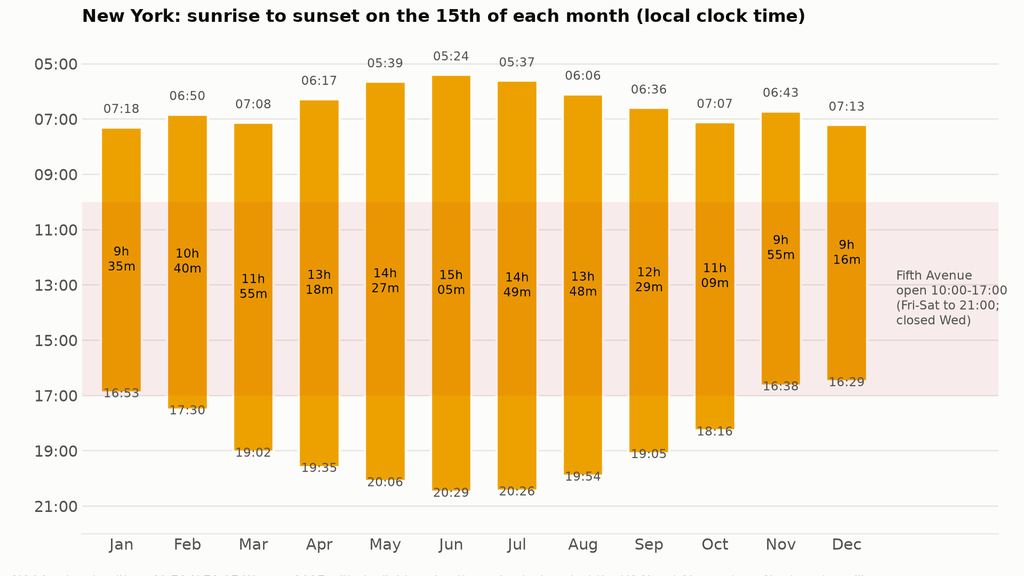
The practical consequence is about the park, not the museum. If the plan was the Met in the afternoon and then a walk through Central Park, from November 1 the walk has to come first. Cleopatra's Needle and the Obelisk plaza are unlit; the paths through the Ramble are not a place to be at dusk with a map on a phone. Our guide to opening hours and the best time to visit works through the month-by-month version of this, including the climate normals, and this article does not repeat it.
When is peak fall foliage in Central Park?
There is no published answer, and the people who would know have decided not to give one. The Central Park Conservancy, which employs the arborists who look after the park's 19,000 trees, runs a live foliage tracker instead: a map of the park with four states, No Change, Changing, Peak and Post-Peak, updated by those arborists as the season moves. Different parts of the park are at different states on the same day, which is the honest answer and also the reason a single date would be useless.
So the tracker is the thing to open, not a prediction. We could not read its current state for this article: the map loads after the page does, and it did not render for us. What we can say is that the tracker exists, that it is the only source with people on the ground behind it, and that in this part of the country late October into the middle of November is the usual window. That is a tendency, not a date, and we are not going to publish last year's peak as if it forecast this year's.

Five minutes from the steps
The Obelisk, on the rise behind the museum
Walk out of the Met, turn into the park, and the first thing on the path is a 220-ton granite obelisk from Heliopolis. The Conservancy dates it to around 1425 BCE and describes its position as "on a rocky hill known as Greywacke Knoll, across from the Metropolitan Museum of Art." It is the oldest outdoor monument in New York City and the oldest man-made object in Central Park.
It was given to the United States by the Khedive Ismail Pasha and installed in January 1881, the second of a pair: the other went to London. In 2011 the Conservancy began a three-year conservation project on it, the most thorough in the monument's history, working with staff from the museum across the road.
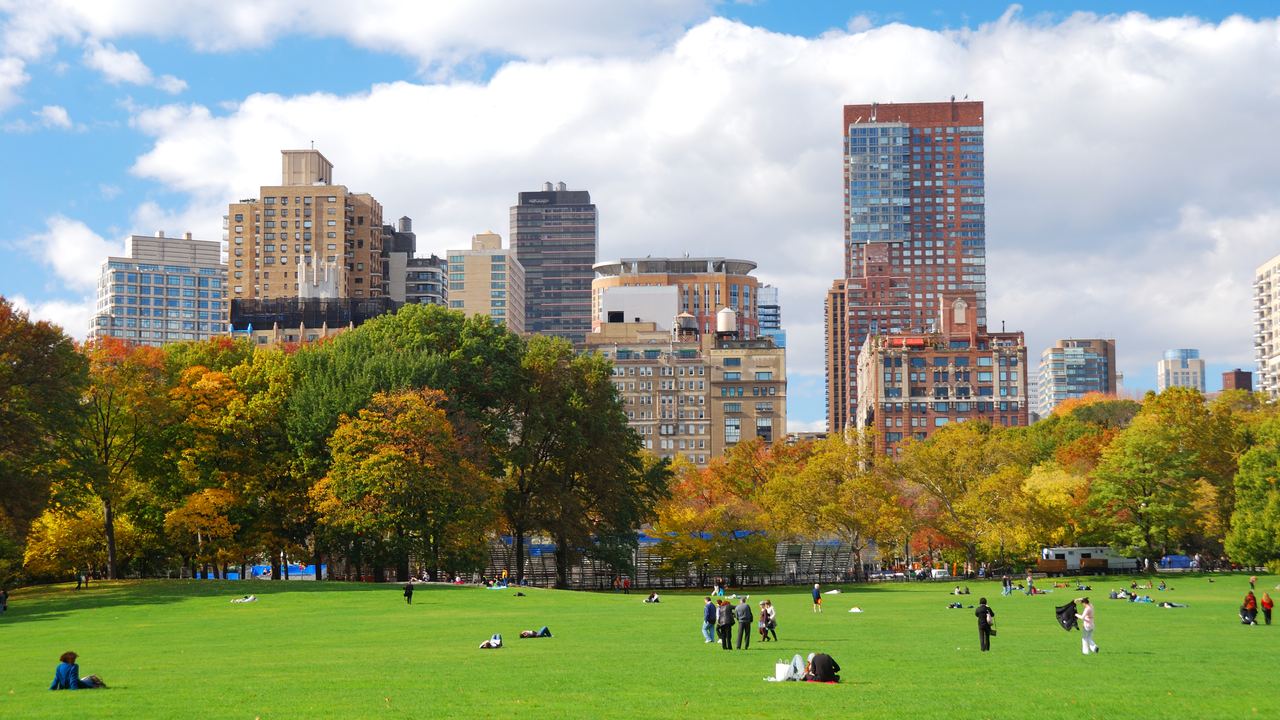
The trees around the knoll turn before the ones down by the Lake, and the plaza is open sky, which makes it the one spot near the museum where you can photograph foliage against a monument rather than against an apartment block.
NYC marathon spectator spots and autumn walks within a few minutes of the museum
Three places inside the park, all reachable on foot from the museum's Fifth Avenue steps. On race Sunday the drives beside them are closed to traffic, which makes the walking better and the driving worse.
Greywacke Knoll and the Obelisk
Directly across from the museum, East Side at 81st. Open sky, early colour, no restrooms. The Conservancy's own location page is the reference.
Turtle Pond and Belvedere Castle
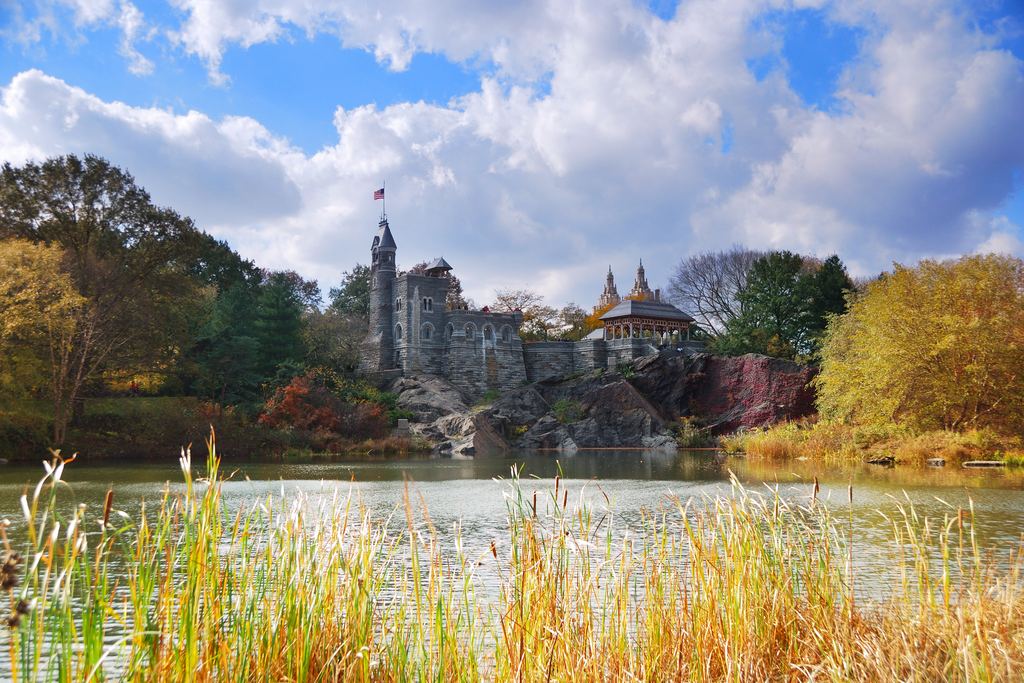
Mid-park at 79th, on Vista Rock. Open daily 10 a.m. to 5 p.m., with terrace access ending at 4:55. Closed Thanksgiving, Christmas and New Year's Day.
The East Drive and the Reservoir
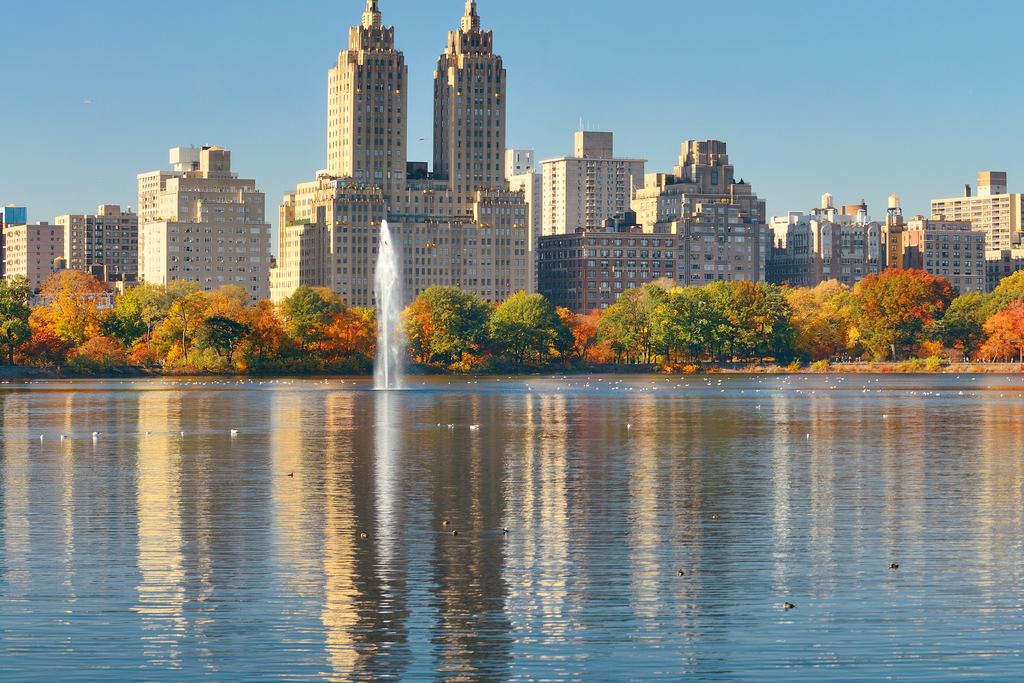
The marathon's own stretch behind the museum, and a running loop the rest of the year. Closed to cars both days of the race weekend.
Belvedere Castle is worth a paragraph of its own, because it answers a question people ask about Central Park weather and get a half-answer to. The castle was completed in 1872, designed by Calvert Vaux and Jacob Wrey Mould as an open-air lookout with no windows or doors. In 1919 the U.S. Weather Bureau turned it into a weather station, adding both. They moved out in the 1960s. The Conservancy's own page is careful about what remains: temperature, wind and rainfall "are still measured at the Belvedere, though primarily now from equipment housed in a fenced-in area just to the south of the building." So the long Central Park climate record does come from here, and it does not come from inside the castle.
Two ice rinks open around that weekend
This is the other reason November 1 is a hinge. Both of the park's rinks come into season within a week of it, and one of them opens on the day of the race.
Wollman Rink opened for the 2026 to 2027 season on the weekend of October 24 and 25, which its own calendar marks as Opening Weekend and a Community Day. The season runs to the weekend of March 14 to 16, 2027. On Sunday, November 1 the rink is priced off-peak. Hours vary by day: 10 a.m. to 2:30 p.m. on Mondays and Tuesdays, to 9 p.m. midweek and Sunday, to 10 p.m. on Friday and Saturday. It is at the south end of the park, nearest entrance 59th Street and Sixth Avenue, which is a long way from the museum.
The Gottesman Rink at the Davis Center is the one that opens on November 1 itself. The Davis Center sits on the east side between 106th and 108th Streets, at the Harlem Meer, and its own visit page says the rink "will open to the public on November 1, 2026" with an opening day celebration. From that date the Davis Center facility, gates and restrooms are open 7:30 a.m. to midnight daily through March 7, 2027, against 7 a.m. to 7:30 p.m. in October. In 2025, its first season, the rink did not open to the public until the middle of November, so this year is nearly two weeks earlier.
Both rinks are north and south of the race, not on it. The Harlem Meer end of the park is close to the course as it comes down Fifth, and the Davis Center is the obvious warm building up there on a cold morning.
What is open when, around the museum, month by month
Four things near the Met that change with the season rather than with the day of the week. Every row comes from the operator's own page, read on October 15, 2026.
| Month | 1 | 2 | 3 | 4 | 5 | 6 | 7 | 8 | 9 | 10 | 11 | 12 |
|---|---|---|---|---|---|---|---|---|---|---|---|---|
| Wollman RinkOpened October 24, 2026 and runs to the weekend of March 14 to 16, 2027. South end of the park, not near the museum. | 1 | 2 | 3 | 4 | 5 | 6 | 7 | 8 | 9 | 10 | 11 | 12 |
| Gottesman Rink, Davis CenterOpens to the public on November 1, 2026. Davis Center open 7:30 a.m. to midnight from that date to March 7, 2027. | 1 | 2 | 3 | 4 | 5 | 6 | 7 | 8 | 9 | 10 | 11 | 12 |
| The Met Cloisters, closing at 4:30 p.m.Winter hours run November 1 to February 28. March to October it closes at 5. Shut on Wednesdays all year. | 1 | 2 | 3 | 4 | 5 | 6 | 7 | 8 | 9 | 10 | 11 | 12 |
| Fall colour, typical onlyThe Conservancy publishes no peak date and runs a live tracker instead. Late October into mid-November is a tendency, not a forecast. | 1 | 2 | 3 | 4 | 5 | 6 | 7 | 8 | 9 | 10 | 11 | 12 |
Rink dates from Wollman Rink and the Davis Center. Cloisters hours from the museum's own operating schedule. Foliage from the Central Park Conservancy.
The Met Cloisters changes its hours the same day
November 1 is also the day the museum's second building starts closing earlier. The Met Cloisters runs 10 a.m. to 4:30 p.m. from November 1, 2026 to February 28, 2027, against 10 to 5 for the rest of the year, and it is closed on Wednesdays like the Fifth Avenue building. It closes for Thanksgiving, Christmas and New Year's Day, but not for the Costume Institute Gala in May, which shuts Fifth Avenue and not Fort Tryon.
Half an hour sounds trivial and is not, because the Cloisters is at the top of Manhattan and the journey is the expensive part. The ticket covers both buildings on the same day, so people try to fit the two into one afternoon; with a 4:30 close and the sun down before five, November is the month that plan stops working. Our page on The Met Cloisters covers the trip north, including the roughly sixty steps from the park entrance up to the ticket desk, and the two hours, half a day, full day page is the one to read if you are trying to decide which building gets the time.
What to do with that Sunday, if you have it
The honest version. If you came to New York for the marathon, the museum is a good Sunday afternoon once your runner has finished, it is open until five, and the walk from the finish area to the Fifth Avenue steps is fifteen-odd blocks north and across, on roads with no cars on them. If you came for the museum and the race is an accident of timing, you have lucked into a day when the park drives have no cars on them and the crowd noise is a few hundred yards west of a building where you cannot hear it.
What we would not do is build the day around standing on Fifth Avenue outside the Met expecting to see runners. They are not there. The recommended viewing zone starts at 90th and goes north, eight blocks and more above the museum, and on the organizer's spectator guidance as we read it on September 30 the park north of the stands is not open to the public on race day. If you want both, watch in the upper 90s in the morning and walk south to the museum afterwards.
The walks we list are in our Central Park walking tours pages, and the season they are built for is the one starting now. For context on the Fifth Avenue side of all this, the stretch of mansions and former mansions below the museum is the subject of our piece on Designing the Gilded Age at the Met, and it is a better walk in November than in August.
Central Park walking tours, most reviewed first
Four of the 19 Central Park walks in our catalog on October 15, 2026, ordered by how many reviews each has collected. None of them is a marathon tour, and on race Sunday the park drives are shut to traffic. Prices show in euros, because the affiliate catalog is priced in euros.
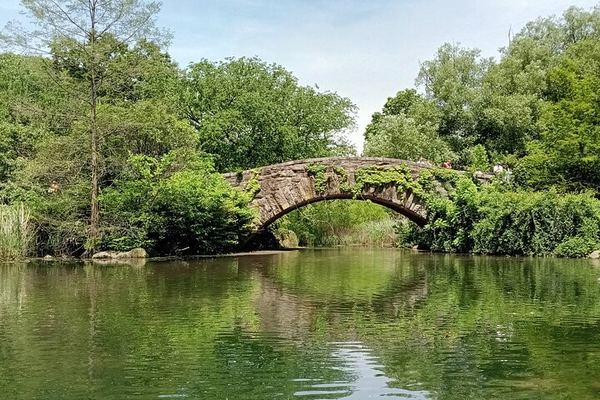
Central Park Walking Tour with Guide Michael Hunt
Two hours on foot with Michael Hunt, a guide with more than 800 park tours behind him: history, trees, wildlife, statues and film spots, for adults and kids.
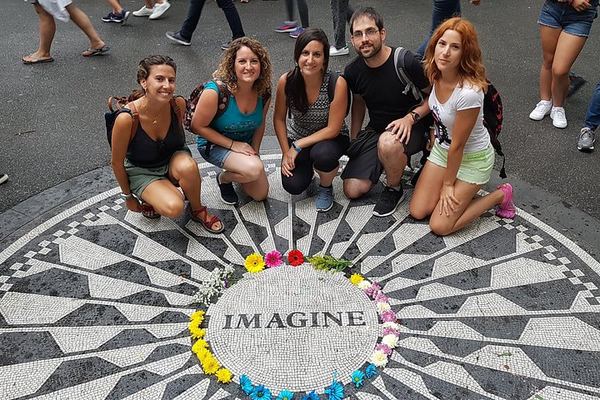
Central Park Film and TV Locations Walking Tour
Actor guides from On Location Tours hold up film stills at more than 30 Central Park locations, from Bow Bridge to Wollman Rink. Two hours, English commentary.
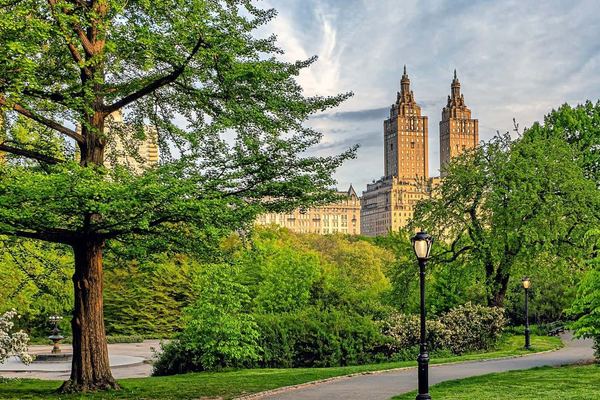
Central Park Free Walking Tour: Bethesda Terrace to Strawberry Fields
Tip-based walk in English from the Maine Monument: Balto, the Mall, Bethesda Terrace, Bow Bridge, the Ramble and Belvedere Castle. No groups over six people.
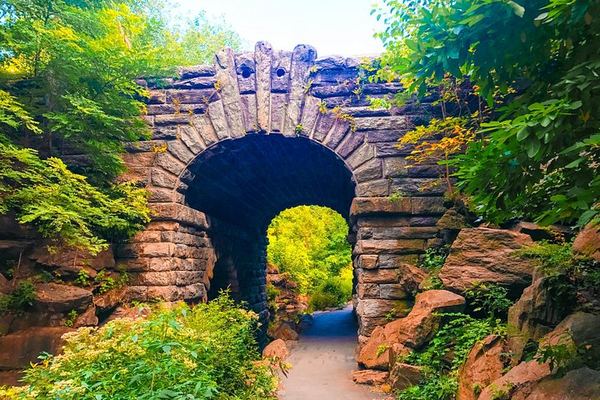
Secret Places of Central Park: North Woods, Forts and Conservatory Garden
A historian leads a 3.25-mile walk through the park above 100th Street: the Ravine, a grotto waterfall, War of 1812 fort sites and the Conservatory Garden.
Ratings collected by Viator, Tripadvisor and Civitatis

Where these facts come from
Everything dated above was read or calculated on October 15, 2026, and it is worth being specific about which source carried which fact, because they are not equally solid.
The street closures come from the City of New York's marathon street closure and no-parking notice for 2025, the most recent edition published. We looked for the 2026 file at the same address and it returned a 404. The course description, the Engineers' Gate entry and the spectator zone label come from the organizer's own course and spectator pages, read on September 30, 2026 and recorded in our source file then. We tried to read them again for this article and could not: nyrr.org was serving a virtual waiting room to every request, which is normal in the fortnight before the race. That is why nothing on this page states a 2026 closure time as fact, and why we have not repeated a report that the 2026 course changes only in the Bronx. We could not open the page that would confirm it.
The museum hours, the dated closures and the Cloisters winter schedule come from the operating schedule records in the museum's own content system, the one its published pages are built from, last edited on August 28, 2026. The sunset times are ours, calculated with the NOAA solar position formula for the museum's coordinates and accurate to about two minutes; the end of daylight saving time follows the schedule in the Energy Policy Act of 2005. The Obelisk and Belvedere Castle facts and the foliage tracker description come from the Central Park Conservancy's own location and guide pages. The rinks come from the Wollman Rink season calendar and the Davis Center visit page. The tour and review counts were read from this site's own catalog the same day.
Two things we deliberately did not write. We did not publish a peak foliage date, because the Conservancy does not publish one and we could not read the live state of its tracker. And we did not publish the 2026 closure times, because the city has not issued them. Check both yourself in the last days of October. This site is independent and not affiliated with the Metropolitan Museum of Art: we do not sell its admission, and we earn a commission on the walking tours above and on nothing the museum or the park sells.
Questions people ask about marathon Sunday near the Met
Does the NYC Marathon go past the Met Museum?
No. The course comes down Fifth Avenue from Harlem but turns into Central Park at 90th Street, eight blocks north of the museum at 82nd. From there it runs on the park's East Drive, behind the building and out of sight of it. The city's 2025 street closure notice closes Fifth Avenue only as far south as 90th.
Is the Met Museum open on marathon Sunday?
Yes. The Met Fifth Avenue keeps its ordinary Sunday hours of 10 a.m. to 5 p.m. on November 1, 2026. The museum's dated closures this season are November 26 for Thanksgiving, December 25, January 1 and May 3, 2027. The marathon is not among them.
When is peak fall foliage in Central Park?
Nobody publishes a date, including the Central Park Conservancy, which runs a live tracker instead with four states and arborists updating it. Late October into the middle of November is the usual window in this part of the country, but different parts of the park reach peak on different days. Open the tracker rather than trusting a date.
When does daylight saving time end in 2026?
Sunday, November 1, 2026 at 2 a.m. local time, the first Sunday in November under the schedule set by the Energy Policy Act of 2005. Sunset over Central Park drops from about 5:54 p.m. on October 31 to about 4:53 p.m. on November 1, which is before the museum closes.
How do I get across Central Park to the Met on marathon day?
Underground. All three park drives close and in 2025 the 79th and 65th Street Transverses closed with them, while the 86th Street Transverse did not appear on the list. The 4, 5 and 6 trains to 86th Street are unaffected and a five-minute walk from the museum. Check the city's 2026 notice, which had not been published on October 15, 2026.
Does anything else change at the museum on November 1?
Yes, at the other building. The Met Cloisters switches to winter hours on November 1, 2026 and closes at 4:30 p.m. instead of 5 until February 28, 2027. Both buildings are shut on Wednesdays, and one ticket covers both on the same day.
Data verified on. Museum hours from its own records; street closures from the city's 2025 notice, the latest published; sunset calculated by us. Read October 15, 2026. Editorial Policy

