



Krasner and Pollock at the Met Museum, and Modern Art on Fifth Avenue
Krasner and Pollock: Past Continuous runs to January 31, 2027 in gallery 899, included in the $30 ticket. We read the museum's records: every Krasner and Pollock work on view that day was inside the show, because the modern galleries stay shut until 2030.
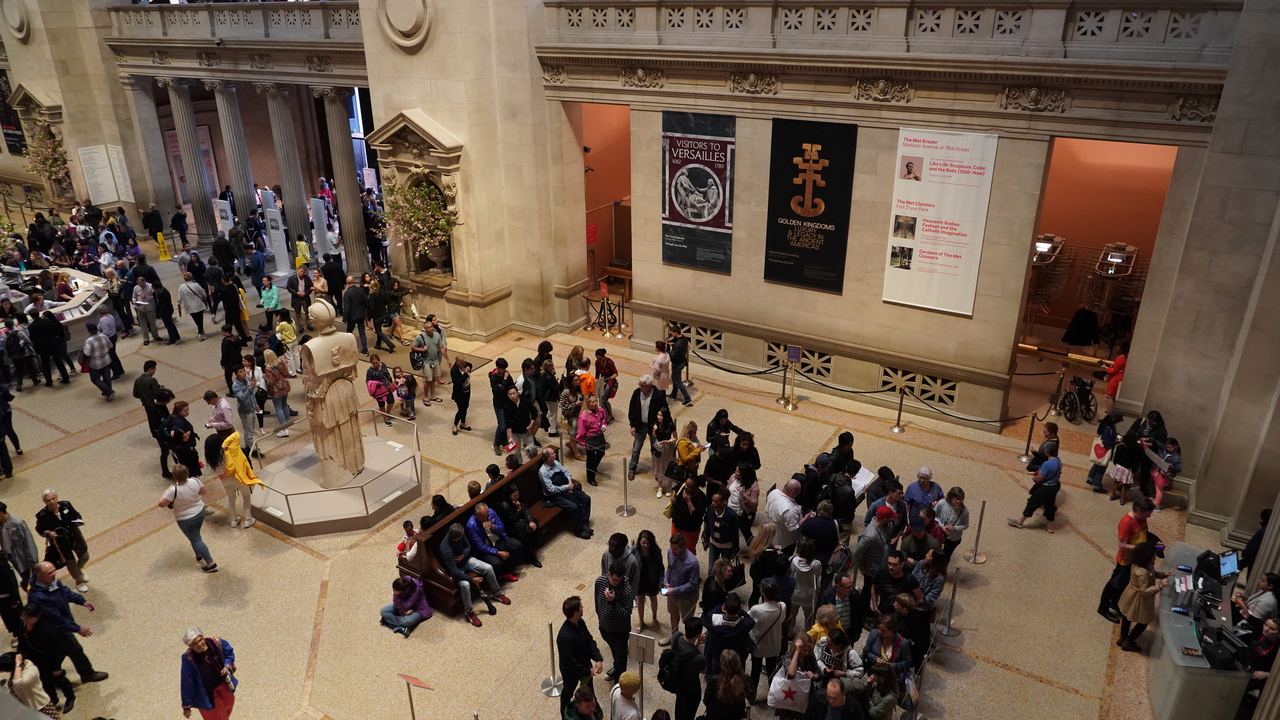
Krasner and Pollock at the Met Museum opened on October 4, 2026, and it has a side effect that is not in the press release. For the next sixteen weeks, gallery 899 is the only room in the Metropolitan Museum of Art where you can see a Pollock. Not the best room. The only one.
We checked that on October 8, 2026, against the museum's own collection database rather than against anybody's review. The Met holds 125 object records for Jackson Pollock and nine for Lee Krasner. Fourteen of them were listed as on view that morning, and every one of the fourteen carried the same gallery number: 899, the Tisch Galleries, where the exhibition is. The reason is one floor up and behind hoarding, and it is the other half of this article.
What is Krasner and Pollock at the Met Museum?
The full title is Krasner and Pollock: Past Continuous. The museum's listing gives the dates as October 4, 2026 to January 31, 2027 and puts it in gallery 899, the Tisch Galleries, on the second floor at The Met Fifth Avenue. The listing carries no ticket price of its own. In the Met's system that means the show is covered by whatever you paid downstairs: the wording on its Plan Your Visit page is that all tickets include exhibitions and same-day entry to both Met sites for the date printed on the ticket.
The subtitle comes from a Krasner painting of 1976. The exhibition runs the two careers side by side rather than treating one as the story and the other as context, which the museum's own release describes as a correction: Pollock's reputation, it says, has historically eclipsed Krasner's. There are over 120 works drawn from the Met's collection and from more than 80 lenders, arranged in twelve chapters, with some rooms putting the two artists together and others giving each one the wall alone. The curators are David Breslin and Brinda Kumar, of the museum's Department of Modern and Contemporary Art.
If you want to know in advance which paintings are worth the trip, the release names several: Krasner's Composition (1949), The Seasons (1957), The Eye is the First Circle (1960) and Combat (1965), and Pollock's Stenographic Figure (1942), Guardians of the Secret (1943), Number 1, 1950 (Lavender Mist) and The Deep (1953). The lenders include the Peggy Guggenheim Collection, the Museum of Modern Art, the Whitney, Tate, the Art Institute of Chicago and the Centre Pompidou. That last detail is worth holding on to if your week in New York already has MoMA and the Whitney in it; we come back to it below.
One claim in the release is the kind of thing that usually turns out to be marketing and in this case appears to be plain fact. The Met calls this the first major New York presentation devoted to either artist in more than 20 years, and separately says it is the Museum's own first major exhibition of either one. For an institution that has owned Autumn Rhythm since 1957, that is a slightly awkward sentence to publish, and they published it anyway.
Pollock first exhibited a painting at The Met in 1943 in an exhibition in support of World War II. By the end of the decade, he would be among the artists—The Irascibles—who mounted a notable critique of the Museum's then-prevailing attitude to contemporary art.
Two museum texts disagree on when the pair met, and since we read both on the same morning we will report both rather than pick. The exhibition overview says they met "in the winter of 1941". The press release says they met "on the occasion of being included in a 1942 exhibition organized by the artist John Graham". A winter straddles two years, so the two may well describe the same evening, but the museum does not say so and neither will we.
Where is Autumn Rhythm at the Met Museum?
Gallery 899, inside the exhibition, as of October 8, 2026. That is the short answer, and it is not the answer most of the web gives.
Autumn Rhythm: Number 30, 1950 is the Met's Pollock. Its collection record dates it to 1950, gives the accession number 57.92 and the accession year 1957, credits the George A. Hearn Fund, and measures it at 8 feet 10 inches by 17 feet 4 inches. The museum bought it within a year of Pollock's death. That record also listed it, on the morning we checked, in gallery 899.
Which means the painting people fly in for is currently hanging in a show that closes. After January 31, 2027, where it goes is not published. The museum may rehang it; the galleries that would normally hold it are shut; we found no statement either way. If seeing it matters to you, the honest advice is to go before the end of January and to check the museum's gallery closures page on the day, because the Met puts in writing that it cannot guarantee access to all galleries at all times.
Every Met-owned Pollock on view is in one room
This is the count we could not find anywhere else, so we made it. Using the museum's public collection API on October 8, 2026, we pulled every recorded work attributed to each artist and read the gallery field one record at a time. The museum lists 125 works by Pollock and nine by Krasner. Of those, ten Pollocks and four Krasners were on view. All fourteen were in gallery 899.
So the exhibition is not an addition to the Met's modern holdings on display. For these two artists it is the display. The Pollocks on view are three paintings, including Autumn Rhythm, Number 28, 1950 and Pasiphaë, plus seven drawings from the late 1930s and early 1940s. The Krasners are two paintings, an untitled canvas of 1948 and Rising Green of 1972, plus two drawings, one of them a self-portrait of about 1929, made when Krasner was around twenty-one. None of the four came from the artist. We checked the credit lines one by one, because the museum's release mentions gifts from Krasner in her lifetime and it would have been easy to assume: these four were given by Mr. and Mrs. Jason McCoy in 1978, Mr. and Mrs. Eugene Victor Thaw in 1983, Mrs. Donald T. Braider in 1986, and the Pollock-Krasner Foundation in 1997.
One number that does not appear on either side of this: zero. That is how many works by either artist the museum had on view anywhere else in the building that morning.

Why the Metropolitan Museum's modern galleries are closed
Because the museum is building a new wing for them, and the old ones came down first. The Met broke ground on the Oscar L. Tang and H.M. Agnes Hsu-Tang Wing on September 15, 2026. It is designed by Frida Escobedo, the first woman to design a wing in the museum's 156 years, it adds 69,500 square feet of exhibition space, which the museum calls a nearly 50 percent increase on the current wing, and it is expected to open in 2030. The museum says it has raised $670 million, enough to cover the whole construction cost plus part of the endowment to run the place.
What that means for a visit this autumn is blunt, and the museum says it first:
The Cantor Roof Garden, Modern and Contemporary Galleries, and Ancient West Asia and Ancient Cyprus Galleries are closed for renovation.
We checked that against the gallery records rather than taking the banner's word for it. Of the 27 spaces the museum numbers from 900 to 926, 23 were flagged closed on October 8, 2026. The four still open are 914, 915 and 916, which include the Levine Court and the King Gallery, and 918. Gallery 926 is the Iris and B. Gerald Cantor Roof Garden, which closed in October 2025 and does not come back until the new wing does, on a larger fourth-floor terrace. Anyone who has read about drinks with a view of Central Park at the Met has read about something that will not exist again until 2030.
The museum has not simply put the twentieth century in storage, though. The table below is the map we would have wanted before going, assembled from the museum's own listings and gallery records on October 8, 2026.
| What | Where | Until when | Extra ticket |
|---|---|---|---|
| Krasner and Pollock: Past Continuous | Gallery 899, the Tisch Galleries | January 31, 2027 | No |
| The Face of Life: Modern Portraits at The Met | Galleries 963 to 965 | Through 2029 per the press release; the listing gives no end date | No |
| Early Picasso and Matisse, and the Lauder cubist rooms | Galleries 828 to 830 | Permanent display, open | No |
| There Are No Words: Si Lewen's Parade | Gallery 690 | January 5, 2027 | No |
| David Hartt: Peripheries | Gallery 735 | February 7, 2027 | No |
| The Genesis Facade Commission: Liu Wei, Speculation | The Fifth Avenue facade; the listing names no gallery | June 8, 2027 | No |
| The modern and contemporary galleries | Galleries 900 to 925, fourth floor | 22 of the 26 closed; Tang Wing in 2030 | Not open |
| The Iris and B. Gerald Cantor Roof Garden | Gallery 926 | Closed; returns with the new wing in 2030 | Not open |
Autumn Rhythm, from the studio to gallery 899
Every date here comes from the museum: the object record for the painting, the press release of February 24, 2026, and the Tang Wing release of September 15, 2026.
The origins
1942
Krasner and Pollock meet
The press release puts the meeting at a 1942 exhibition organized by the artist John Graham. The exhibition's own overview says the winter of 1941. They married in 1945.
1950
Autumn Rhythm is painted
Oil-modified alkyd resin on canvas, 8 feet 10 inches by 17 feet 4 inches. The drip technique ran, by the museum's account, from 1946 to 1951.
The growth
1957
The Met buys it
Accession 57.92, George A. Hearn Fund. Pollock had died in 1956, and the museum acquired the painting within the year.
1984
Krasner's memorial service, at the Met
She died that year, having given works to the museum during her lifetime. The release notes that the Met was the venue for her memorial.
Today
October 4, 2026
Past Continuous opens
Gallery 899. The first major New York presentation devoted to either artist in more than twenty years, and the Met's first major exhibition of either.
January 31, 2027
It closes
Where the Met's own Pollocks and Krasners hang after that date is not published. The galleries that would normally hold them are shut.
2030
The Tang Wing opens
69,500 square feet of exhibition space, $670 million raised, designed by Frida Escobedo. The roof garden returns on the fourth-floor terrace.
What a guide can and cannot do in the Krasner and Pollock galleries
If you are about to pay for a guide mainly to have this exhibition explained to you, stop here and read the museum's own rule first. It is short, it is easy to miss, and it decides what the booking is actually buying.

The museum's group guidelines
You walk into the exhibition alone
The Met's group guidelines carry one line that changes what a booking is worth: "Lecturing is not permitted in special exhibitions."
The same page requires advance reservations for third-party guided tours regardless of size, requires anyone lecturing in the galleries to hold a Museum-issued lecture badge, and adds that unauthorized lecturers "will be asked to end their tour immediately".
So a guide can meet you, take you through the Great Hall, and talk you through the permanent collection. At the door of gallery 899 the talking stops and you go in with the labels. That is not a flaw in anyone's product. It is the museum's rule, and it applies to every operator on every booking site.
Worth saying plainly, because the sales pages will not: if the exhibition is the reason you are booking a guide, the guide cannot take you round it. We made the same point about the Tiffany drawings in our piece on Designing the Gilded Age at the Met, and the rule is the museum's, not that show's. A guided tour is still the better buy for a first visit to a building with 466 numbered galleries, which is precisely the case our guide to choosing a Met tour goes through product by product. Just book it for the museum, not for the show.
Picasso did not go into storage
The closed wing has produced a second rumor worth killing, which is that modern painting at the Met is effectively off the table until 2030. We counted this one too. On October 8, 2026 the museum's records listed 51 paintings by Pablo Picasso in the collection, of which 15 were on view.
Thirteen of the fifteen are in galleries 828, 829 and 830, which were open that morning: the rooms the museum labels Bonnard and Vuillard, the Fin de Siècle Avant-Garde, and Early Picasso and Matisse. Most of them carry the credit line of the Leonard A. Lauder Cubist Collection, and they cover a tight and interesting stretch, from Nude with Raised Arm and Drapery of 1907, a study for Les demoiselles d'Avignon, through the Horta de Ebro canvases of 1909 to the pasted-paper still lifes of 1914. The other two are the ones a first-time visitor is likeliest to walk past: The Blind Man's Meal of 1903, in the Great Hall Gallery, and the 1905 to 1906 portrait of Gertrude Stein, which she left to the museum herself, in gallery 965.
Gallery 965 is one of the three rooms holding The Face of Life: Modern Portraits at The Met, which the Tang Wing release says runs through 2029. The museum's own listing for it has a start date of May 18, 2026 and no end date at all, so we are quoting the release and flagging the gap. Either way it is the thing to know if your reason for coming is twentieth-century painting: the portraits show and the cubist rooms are open, free with the ticket, and will outlast the Krasner and Pollock galleries by years. Our page on the museum's departments and collections sets out how the floors fit together.

One practical consequence of that lender list. MoMA and the Whitney both lent to this show, so a few of the works you might be going downtown for are at the Met until the end of January. We are not going to tell you which: we have not verified any individual loan against either museum's own listing, and a wrong answer here costs somebody a morning. Check the museum you are planning to visit, on its own site, before you build a day around one painting. If you are weighing the city's museums against each other, our New York museums and galleries pages cover what each one actually holds.
Hours, tickets and the one queue at the Met Museum
Nothing about this show needs booking, and that is the part people get wrong, usually because they have just come from a museum where it was not true. The museum's listing carries no separate ticket. There is no timed entry for general admission. The Met's wording is that tickets can be bought online but advance tickets are not required.
Prices, read from the museum's own page on October 8, 2026: $30 for adults, $22 for visitors 65 and over and for visitors with a disability buying in person, $17 for students, and free for children 12 and under. Pay-what-you-wish is not a tourist discount, and this trips up more visitors than any other rule at this museum: it is for residents of New York State and for students from New York, New Jersey and Connecticut, with a minimum of one cent, and the detail is on our admission page. The ticket is good for the same day only, at both Met sites, exhibitions included.
Then the hours, which are the lever worth pulling for a show like this. The Met Fifth Avenue is closed on Wednesdays. It opens at 10 and closes at 5, except on Friday and Saturday, when it stays open until 9, and it is also closed on Thanksgiving Day, December 25 and January 1. Those two late evenings are the only published fact we have about a quieter building: the museum does not publish attendance by hour, so anyone telling you the exhibition is empty at 11am is guessing. Our page on opening hours and when to go works through what can and cannot be said about timing here.
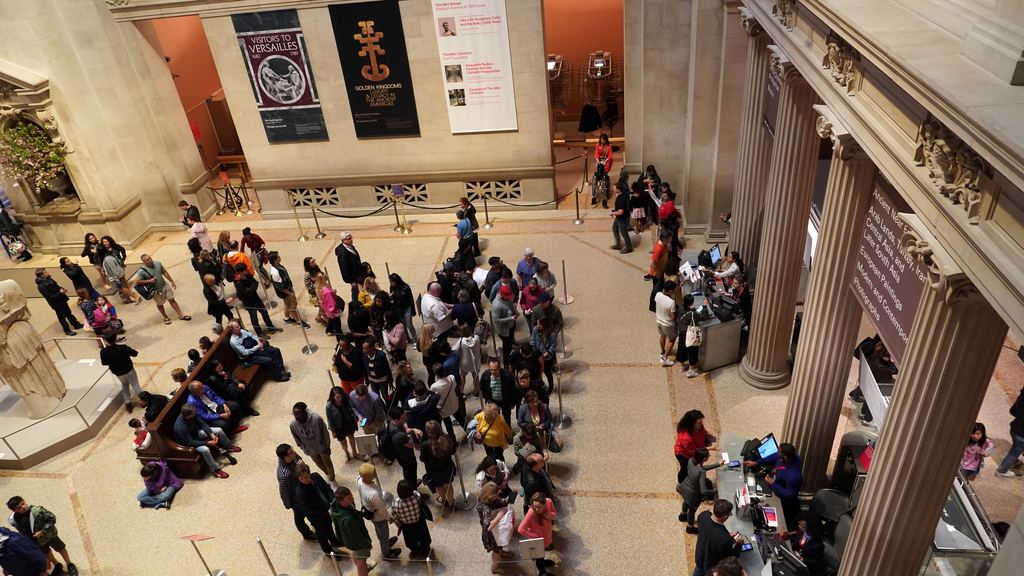
And the thing no product can sell you: at the Met there is no entry queue to skip. You buy at the desk without a reservation. The only line everybody stands in is the security check, which is required of every visitor and member, and no ticket of any kind skips it.
Guided tours of the museum, most reviewed first
The four most reviewed Metropolitan Museum guided tours in our catalog on October 8, 2026, out of 20 in the category. None of them can take you through gallery 899, because the museum does not allow lecturing in special exhibitions: these cover the permanent collection. Prices are in euros, because the affiliate catalog is priced in euros.
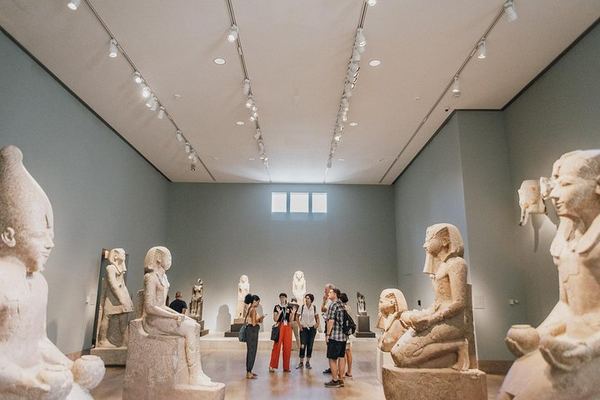
The Met Highlights Guided Tour for Small Groups of up to 18
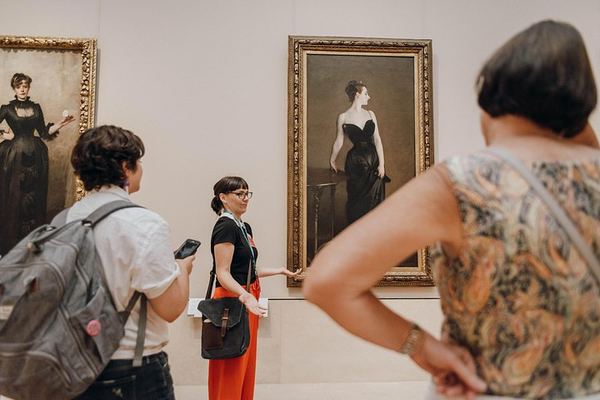
An art historian leads up to 18 people through the Met: Dendur, Henry VIII's armor, Madame X, the Greek and Roman galleries. Admission included, 2 or 3 hours.
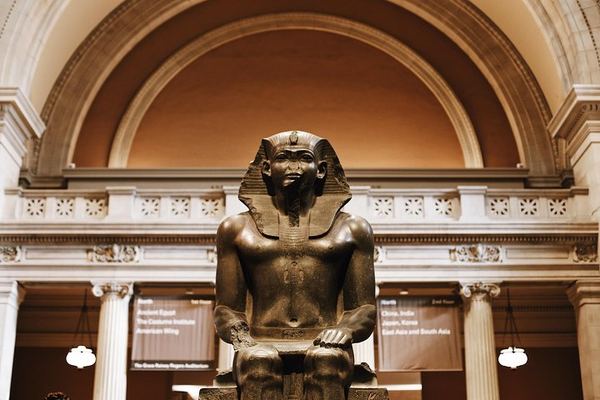
Private Guided Tour of the Met for Groups of up to 8
Just your party and a guide for 2.5 hours at the Met: Henry VIII's armor, Vermeer, Van Gogh, the American Wing. Entrance fees included, evenings Fri and Sat.
Met Museum Highlights in Two Hours with an Expert Guide
An art guide leads up to 18 people past Monet's Water Lilies, Madame X, Rodin and the Tomb of Perneb in two hours, admission included. You stay on afterwards.
Met Museum Highlights Tour by ExperienceFirst, Ticket Included
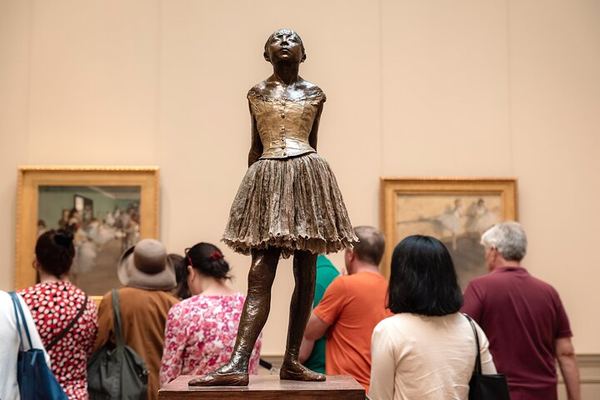
An ExperienceFirst guide meets you past security with your ticket: two hours through Egyptian, Greek, Roman and European art, up to 10 travelers per booking.
Ratings collected by Viator and Tripadvisor
Where these facts come from
Everything dated above was read on October 8, 2026. The exhibition dates, gallery 899, the absence of a separate ticket and the status of every gallery number quoted come from the museum's own content system, which is what its published pages are built from; the listing for this exhibition was last edited on October 1, 2026. The counts of works, the lender list, the twelve chapters, the named paintings and the quotation above come from the museum's exhibition page and its press release of February 24, 2026. The Tang Wing figures, the 2030 opening and The Face of Life running through 2029 come from the release of September 15, 2026.
The counts of works on view are ours, and we would rather show the method than assert the number. We queried the museum's public collection API for every record attributed to each artist, paged through the complete result rather than the first hundred, fetched each record, and read its gallery field. An empty gallery field means the object is not on display. That is 125 Pollock records, nine Krasner records and 552 Picasso records, read one at a time. One wrinkle worth reporting, since it bears on whether an absence is real: 108 of the object IDs the Pollock and Krasner searches handed back have no record behind them at all, and the museum's own object endpoint answers "Not a valid object" for every one of them. The rule about lecturing comes from the group guidelines, and the prices and the same-day rule from the museum's Plan Your Visit page. Tour counts and review counts were read from this site's own catalog the same morning.
Three cautions we would rather put in writing. Gallery assignments at this museum change by the hour, and the Met states that it cannot guarantee access to any gallery at any time, so the numbers above describe the morning we checked, not the morning you arrive. We have no image of any work in the exhibition because Krasner and Pollock are both in copyright: the museum's record for Autumn Rhythm is marked as not public domain and carries no image, which is why there is no painting anywhere on this page. And this site is independent. We are not affiliated with the Metropolitan Museum of Art, we do not sell its admission, and we earn a commission on the tours above but on nothing the museum sells.
Questions people ask about Krasner and Pollock at the Met
Where is Autumn Rhythm at the Met Museum?
In gallery 899, inside the Krasner and Pollock exhibition, as of October 8, 2026. The museum's collection record for the painting gives that gallery number. Where it hangs after January 31, 2027 has not been announced, and the galleries that would normally take it are closed until 2030.
What happens to the Met's Pollocks after January 31, 2027?
The museum has not said. All ten Pollock works and all four Krasner works on view on October 8, 2026 were inside the exhibition, and the galleries that would normally show them stay closed until the Tang Wing opens in 2030. The museum may rehang individual paintings elsewhere, but we found no statement promising it.
Why are the Met's modern art galleries closed?
The museum is rebuilding them. It broke ground on the Oscar L. Tang and H.M. Agnes Hsu-Tang Wing on September 15, 2026, designed by Frida Escobedo, and expects to open in 2030 with 69,500 square feet of exhibition space. On October 8, 2026, 23 of the 27 spaces numbered 900 to 926 were flagged closed, the Cantor Roof Garden among them.
Can I still see Picasso at the Met during the renovation?
Yes. On October 8, 2026 the museum listed 15 Picasso paintings on view, 13 of them in galleries 828 to 830, which include the Leonard A. Lauder Cubist Collection rooms. The portrait of Gertrude Stein is in gallery 965 and The Blind Man's Meal in the Great Hall Gallery. All of them are open and included in admission.
Is Krasner and Pollock at The Met Fifth Avenue or The Met Cloisters?
The Met Fifth Avenue. The museum's listing links gallery 899 to that building explicitly. It is worth checking for any Met show, because the museum has two sites and its listings do not always name which one. The Cloisters is a separate building in northern Manhattan, well away from Fifth Avenue, so turning up at the wrong one costs a morning.
Do I need to book a time slot for the exhibition?
No. There is no timed entry for general admission at the Met and no separate ticket for this show. The museum's own wording is that tickets can be bought online but advance tickets are not required. The only queue is the security check, which everyone goes through and no ticket skips.
Data verified on. Exhibition dates, gallery status, prices and every count of works on view read from the museum's own records on October 8, 2026. Editorial Policy

